Still in "Stay Safe at Home" mode. Read nine books four of which I found engrossing, three were pleasant enough to distract me from the news, and two fall into the "boring but I sort of finished them" category (there was much skimming involved).
Other than the five walks listed below, I left the house only for a curbside pickup of a produce box.
Reading
Fiction:
5 stars
The Dreamed Part (Trilogía las partes #2) by Fresán, Rodrigo; translated from the Spanish by Will Vanderhyden (Read along with Season 11 of the Two Month Review)
Spiritual Choreographies by Labbé, Carlos; translated from the Spanish by Will Vanderhyden
The author is also a musician and composer. He has created a playlist for this novel on Spotify
4 stars
Night School: A Reader for Grownups by Bán, Zsófia; afterword by Péter Nádas; translated from the Hungarian by Jim Tucker
3+ stars
The Better Liar by Jones, Tanen
3 stars
Redhead by the Side of the Road by Tyler, Anne
Anne Tyler: “I am a seat-of-the-pants reader” author is interviewed by Leo Robson
The Sun Down Motel by St. James, Simone
2 (generous) stars
Simon the Fiddler by Jiles, Paulette
New Waves by Nguyen, Kevin
Nonfiction:
4+ stars
Hell and Other Destinations: A 21st-Century Memoir by Albright, Madeleine K.
Online stuff:
A fun Basketball Shot on Twitter
A lovely Massachusetts garden Boulderwoods: A Celebration of Rhododendrons
Readings from all 15 finalists for the 2020 Best Translated Book Awards! BTBA 2020 Readings
(This was originally done on Zoom and was my first time using the Zoom App.)
Socially Distanced Out-of-the-House Exercise:
5/2 walked 2.7 miles (neighborhood)
5/5 walked 1.5 miles (Crystal Lake)
5/11 walked 1.2 miles (River Highlands)
5/13 walked 1 mile (Haddam Meadows)
5/19 walked 1 mile (Long Hill Estate)
Showing posts with label translation. Show all posts
Showing posts with label translation. Show all posts
Monday, June 01, 2020

Thursday, August 01, 2019
July 2019 Reading
All good reading for July, with one exception.
Fiction (in no particular order within the star ratings)
5 stars:
If Beale Street Could Talk by Baldwin, James (public library)
War, So Much War by Rodoreda, Mercè; translated from the Catalan by Maruxa Relaño and MarthaTennent (my collection)
Hollow Kingdom by Buxton, Kira Jane (Advance Review Copy, Shelf Awareness)
Eight Stories: Tales of War and Loss by Remarque, Erich Maria (translators unidentified) (my collection)
The Most Fun We Ever Had by Lombardo, Claire (public library)
The Imagined Land by Berti, Eduardo; translated from the Spanish by Charlotte Coombe (my collection)
Solovyov and Larionov by Vodolazkin, Eugene; translated from the Russian by Evgenij Vodolazkin and Lisa Hayden (advance review copy, LibraryThing
4 stars:
L'Amour by Duras, Marguerite; translated from the French by Kazim Ali and Libby Murphy (my collection)
The City Where We Once Lived by Barnes, Eric (public library)
The Vagrants by Li, Yiyun (my collection)
San Diego Noir edited by Hart, Maryelizabeth (my collection)
3 stars:
The Beekeeper of Aleppo by Lefteri, Christy (Advance Review Copy, Shelf Awareness)
The Quest by Baroja, Pío; translated from the Spanish by Isaac Goldberg (my collection - Amazon freebie)
Smoking Kills by Laurain, Antoine; translated from the French by Louise Lalaurie Rogers(blog win)
The Evenings: A Winter's Tale by Reve, Gerard; translated from the Dutch by Sam Garrett (public library)
1 star
The Skin Is the Elastic Covering That Encases the Entire Body by Rasmussen, Bjørn; translated from the Danish by Martin Aiken
I did actually finish this but did not like it. Yes it was poetic, well written, etc. Best I can say about it is that it is short. (from my collection but I'm not keeping it!)
Nonfiction
5 stars:
The Man Between: The Life and Legacy of Michael Henry Heim by Heim, Michael Henry (and others) (my collection)
3 stars:
Memoirs of Gluckel of Hameln by Glückel von Hameln; translated from the German by Marvin Lowenthal (my collection)
On the Clock: What Low-Wage Work Did to Me and How It Drives America Insane by Guendelsberger, Emily (public library)
Fire and Ice by Mingle, Jonathan (Advance Review Copy--from ages ago)
Rough Magic: Riding the World's Loneliest Horse Race by Prior-Palmer, Lara (public library)
Saturday, March 09, 2019
These Caught My Attention Because...
Because this is the land where I was grown...
The Land Where Birds Are Grown. A visit to the engineered wetlands of California’s intensively cultivated Central Valley by Cynthia Hooper
Because procrastination is a thing with me...
I've Been Meaning to Talk to You About Procrastination by David Abrams
and on the same note...
When you're writing, it's good to give yourself little rewards along the way.— Chris Kelly (@imchriskelly) March 6, 2019
For example, once I've typed a word, I allow myself to look at the internet for 4 hours.
Because I went to the eye doctor yesterday and something he told me led to my googling and finding this...
Mayo Clinic Q and A: Fish oil supplements and dry eyes By Liza Torborg
I've been taking this stuff for other reasons for years and didn't know I was helping my eyes.
Because he was Connecticut based...
“Form-Generating is Similar to Music – You Try to Compose Music and Suddenly the Melody Comes”: In Conversation with Kevin Roche by Vladimir Belogolovsky
Because lit in translation...Yes
The Catalan Paradox: Writers, Editors, and Translators on the Literature of a Stateless Language
Azareen Van der Vliet Oloomi interviews Quim Monzó
Between worlds: in praise of the literary translator by Miranda France
Gendered “Revenge” in Emma Ramadan’s Reworking of Brice Matthieussent’s Meta-Novel
By Arshy Azizi
It's rare that I read a review or interview concerning a book I'm currently reading but I couldn't resist this one. I was about 2/3 of the way through the book when I succumbed to the temptation to google to find out if the translator (Emma Ramadan, that is--everyone in this book is a translator of sorts) had given any interviews on this work. I found this review and decided to read it. It goes beyond where I had read so there was a chance of spoilers. But I didn't think anything could spoil the marvelous book. I was right. There are some revelations but, for me, no spoilers though other readers might not agree.
Saturday, January 13, 2018
January (second week) 2018 Reads
The "Deal Me In" story this week was a so..so one about a new mother. The three novels I read were all really good, the noir was good, and the non-fiction on translation theory was excellent.
Card: 6 of Hearts
Story: Bravery by Charles Baxter (in The best American short stories, 2013)
Meh...
from the Library...
The Strays by Emily Bitto
Australian girl grows up in the shadow of her best friend's eccentric family. Set in the 1930s.
The Ocean in the Closet by Yuko Taniguchi
Ten year old Japanese-American girl searches her family background to better understand her disturbed parents. Set in 1978 San Francisco and Japan. Narrative moves between the girl's account and that of her great uncle. The uncle's story has many flashbacks to the time of the post WW2 American occupation of Japan.
Trieste by Daša Drndić ; translated from the Croatian by Ellen Elias-Bursać
A complicated story of Jewish-Italian family in WW2. Fictional narrative is interspersed with much factual documentary of Nazi atrocities, particularly the Lebensborn project. Very difficult read.
from my shelves...
Montreal Noir edited by John McFetridge and Jacques Filippi
Most of the ten anthologies I have read from the Akashic Noir series have been good, but this one is one of my favorites. The stories feature a variety of protagonists and situations. Who expects to find, among the usual suspects, guys who hunt coyotes for sport in the burbs of Montreal?
Free review copy from publisher through Goodreads First Reads giveaway.
Literary Translation and the Making of Originals by Karen Emmerich; Brian James Baer , Michelle Woods
Card: 6 of Hearts
Story: Bravery by Charles Baxter (in The best American short stories, 2013)
Meh...
from the Library...
The Strays by Emily Bitto
Australian girl grows up in the shadow of her best friend's eccentric family. Set in the 1930s.
The Ocean in the Closet by Yuko Taniguchi
Ten year old Japanese-American girl searches her family background to better understand her disturbed parents. Set in 1978 San Francisco and Japan. Narrative moves between the girl's account and that of her great uncle. The uncle's story has many flashbacks to the time of the post WW2 American occupation of Japan.
Trieste by Daša Drndić ; translated from the Croatian by Ellen Elias-Bursać
A complicated story of Jewish-Italian family in WW2. Fictional narrative is interspersed with much factual documentary of Nazi atrocities, particularly the Lebensborn project. Very difficult read.
from my shelves...
Montreal Noir edited by John McFetridge and Jacques Filippi
Most of the ten anthologies I have read from the Akashic Noir series have been good, but this one is one of my favorites. The stories feature a variety of protagonists and situations. Who expects to find, among the usual suspects, guys who hunt coyotes for sport in the burbs of Montreal?
Free review copy from publisher through Goodreads First Reads giveaway.
Literary Translation and the Making of Originals by Karen Emmerich; Brian James Baer , Michelle Woods
Friday, December 29, 2017
December (fifth week) 2017 Reads
Four novels, two books of short stories, and some online reading...
The stubborn second Joker in my Deal Me In deck didn't appear until the final week of the 2017 challenge. So I have been looking at a bunch of rosters. Lot's of tempting stories, several I'd like to read but can't access. I finally settled on a ghost story from Nick's roster.
Nick lists this as being in Alfred Hitchcock Presents: 12 Stories for Late at Night, but I found that is also available on Gutenberg.
 |
| Deal Me In |
Classic tale of something that haunts several generations of an English country manor family. Sufficiently creepy for late night reading. I'll be reading more from this collection.
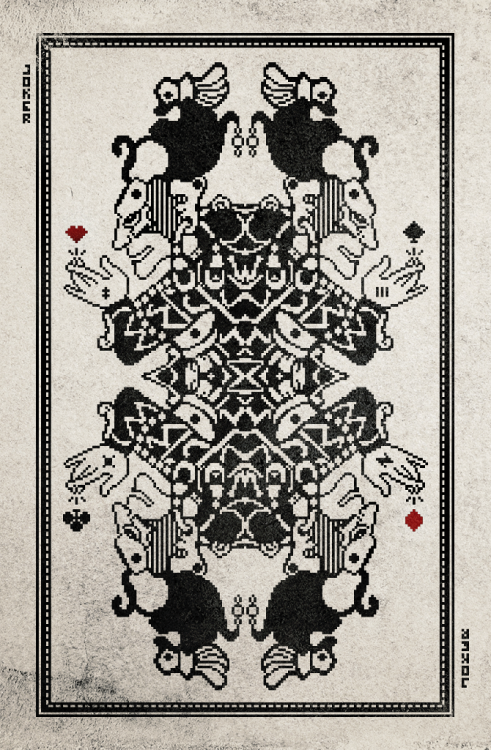

A creepy Joker for a creepy story.
The King of hearts for my weekly story is from Polaris "a celestial-themed deck with modern woodcut-style illustrations." The story is not celestial but this figure with parts missing reminds me of how seriously the battle wounds messed up the veteran in the story.
Weekly Story: Outside Kandahar by Lucas Flatt (on Pithead Chapel an online literary journal)
A tough story in which a veteran of Afghanistan action is caretaker for his brother-in-law, a disabled veteran of the same war.
online....
Ælfgyva: The Mystery Woman of the Bayeux Tapestry – Part I; Ælfgyva: The Mystery Woman of the Bayeux Tapestry – Part II; Ælfgyva: The Mystery Woman of the Bayeux Tapestry – Part III; Alfgyva: The Mystery Woman of the Bayeux Tapestry – Part IV to come. By Paula Lofting
Judith Sollosy: No flotsam and jetsam blowing in the wind
An interview with a translator (Hungarian/English)
[A Conversation with Jung Young Moon] Writing for Skeptics: Navigating Meaninglessness
The Korean author is interviewed by Justine Ludwig.
Gutenberg find....

The Rubáiyát of a Persian Kitten by Oliver Herford
Charming 1904 parody. Here's a sample:
"Sometimes I think perchance that Allah may,
When he created Cats, have thrown away
The Tails He marred in making, and they grew
o Cat-Tails and to Pussy-Willows grey."
from my shelves....
No One Writes Back by Eun-Jin Jang; translated from the Korean by Jung Yewon
This first person tale of a postman who quits his job to travel was really fun to read. He travels for about three years and most nights he lays on the floor of his motel room and writes a letter. Sometimes he writes to family members, other times to people he's met on his journey. As we follow his trip and read some of the letters we learn about his former life.
The Story of Arthur Truluv by Elizabeth Berg
A sweet story of three lonely people putting together a shared household. The three --a elderly widower, a retired spinster teacher, and a teenage girl--manage to become an unconventional (at times unconvincing) family. This almost crosses the line from "heart warming" to "sentimental slop" and, appropriately, I read it on Christmas day. 'nuff said.
Advance review copy through Goodreads giveaway.
Krik? Krak! by Edwidge Danticat
Short stories of the Haitian experience (both in Haiti and New York). Some of these (especially Night Women) can almost be read as poems . Excellent.
Contents: Children of the sea; Nineteen thirty-seven; A wall of fire rising; Night women; Between the pool and the gardenias; The missing peace; Seeing things simply; New York day women; Caroline's wedding; Epilogue: Women like us.
Man V. Nature by Diane Cook (Kindle ed)
Excellent debut collection of edgy short stories.
Contents: Moving on; The way the end of days should be; Somebody's baby; Girl on girl; Man v. nature; Marrying up; It's coming; Meteorologist Dave Santana; Flotsam; A wanted man; The mast year; The not-needed forest.
The next are both told from the point of view of a teenage boy. Both are interesting coming of age tales but both are somewhat flawed in getting the authentic voice of a young person. Of the two Mozley was more poetic, but Freud's boy was more convincing. The "Mr Mac" is Charles Rennie Mackintosh and I enjoyed that aspect of Freud's book.
Mr Mac and Me by Esther Freud
Elmet by Fiona Mozley(Kindle ed)
Saturday, July 29, 2017
July (fourth week) 2017 Reads
We finished it!
 The Invented Part by Rodrigo Fresán, Translated from the Spanish by Will Vanderhyden
This has been an amazing experience. Chad Post of Open Letter Books has led the Two Month slow read of this fantastic novel by providing summaries of each section, broadcasting weekly podcast discussions, setting up a Goodreads group, and publishing a Will Vanderhyden interview with Fresán.
This book was so complex, so convoluted, so full of surprises, so much fun that I can't possibly do it justice here. The best thing is to defer to Chad's great material at the Three Percent blog.
I love this book. It's one of the best things I've read this year. I and look forward to more Fresán.
“Deal Me In 2017!” Story of the week: Joy of Traveling by Jung Young Moon (in A most ambiguous Sunday, and other stories), Translated from the Korean by Jung Yewon
 Two men and a woman have agreed to go on a trip together, but one of the men, K, doesn't show up. The others decide to go anyway.
As they drive they have a disjointed inconsequential conversation, make a couple of stops, he takes some pictures.
The narration fills in with how the two met and how they met K, a bisexual. It's not quite clear what the relationships are, we can only guess...
Card: Seven of Spades from Zoe's blog thing: Engineering! Art! Stuff!
The Invented Part by Rodrigo Fresán, Translated from the Spanish by Will VanderhydenThis has been an amazing experience. Chad Post of Open Letter Books has led the Two Month slow read of this fantastic novel by providing summaries of each section, broadcasting weekly podcast discussions, setting up a Goodreads group, and publishing a Will Vanderhyden interview with Fresán.
This book was so complex, so convoluted, so full of surprises, so much fun that I can't possibly do it justice here. The best thing is to defer to Chad's great material at the Three Percent blog.
I love this book. It's one of the best things I've read this year. I and look forward to more Fresán.
“Deal Me In 2017!” Story of the week: Joy of Traveling by Jung Young Moon (in A most ambiguous Sunday, and other stories), Translated from the Korean by Jung Yewon
 Two men and a woman have agreed to go on a trip together, but one of the men, K, doesn't show up. The others decide to go anyway.
As they drive they have a disjointed inconsequential conversation, make a couple of stops, he takes some pictures.
The narration fills in with how the two met and how they met K, a bisexual. It's not quite clear what the relationships are, we can only guess...
Card: Seven of Spades from Zoe's blog thing: Engineering! Art! Stuff!
Zoe and another artist started modifying a deck of cards with various designs. They seemed not to have finished the project (the blog hasn't been updated recently). The few displayed are quite fanciful and some are in full color. It looks like a fun project.
This card might describe the countryside the couple (their names aren't given) in the story are driving through. There are rolling hills with vineyards and a rice paddy.
online...
Sequoia Nagamatsu - Stories
The author of the story collection Where We Go When All We Were Is Gone provides links to online publications of his stories. I'm slowly making my way through these links. Some lead to free, full text stories, other stories are available by purchasing online issues. I really enjoyed the ones I could freely access. In some cases I had to use a site's search function to find the story because it had gone to archive. But even if you can't find Nagamatsu's work these links lead to some interesting journals.
Translator as Medium by Charlotte Mandell
What Fourth-Grade Archaeologists Have Found in Their School’s Closet by Eric Grundhauser
The Ghost Villages of Newfoundland: A controversial government resettlement program has left centuries-old fishing villages abandoned by Luke Spencer
A good novel about a holdout of the relocation is Sweetland by Michael Crummey..jpg?1501130258)
In Defense of the Emoji Building and Architecture Being Fun, Sometimes by Rory Stott
The arguments against seem to center around that these are frivolous, that they will go out of date, or that they are sending us down a slippery slope.
Maybe architects have to think that architecture must be serious, timeless, etc., but I come in on the side of being a little playful now and then. I like a building that makes me smile.
Dated? Let's get rid of gargoyles, coats of arms, art deco scrolls and flourishes, or anything else that suggests when a structure was built. Boring.
Slippery slope? What next? Does this open the door for medallions featuring @, #, recycling symbols, and other graphic signs of our times? So what? Shrug.
from my shelves...
 Lunar Follies
by
Gilbert Sorrentino
Lunar Follies
by
Gilbert Sorrentino
It's not quite accurate to say I've finished this book. I have read all fifty-three items, but I've only read them once. Like poetry, this is the sort of thing -if one likes this sort of thing- to reread. It is, so to speak, a parody of parody. A spoof on almost everything: art, sports, personal names, critics and criticism, writing, itself, four-letter words, and (I suspect) readers of books like this.
It seems oddly appropriate that I got this book in a ten dollar blind grab-bag purchase from the publisher. I also liked the other books in the bag, but this one was the most fun.
from the library....
This card might describe the countryside the couple (their names aren't given) in the story are driving through. There are rolling hills with vineyards and a rice paddy.
online...
Sequoia Nagamatsu - Stories
The author of the story collection Where We Go When All We Were Is Gone provides links to online publications of his stories. I'm slowly making my way through these links. Some lead to free, full text stories, other stories are available by purchasing online issues. I really enjoyed the ones I could freely access. In some cases I had to use a site's search function to find the story because it had gone to archive. But even if you can't find Nagamatsu's work these links lead to some interesting journals.
Translator as Medium by Charlotte Mandell
What Fourth-Grade Archaeologists Have Found in Their School’s Closet by Eric Grundhauser
The Ghost Villages of Newfoundland: A controversial government resettlement program has left centuries-old fishing villages abandoned by Luke Spencer
A good novel about a holdout of the relocation is Sweetland by Michael Crummey.
.jpg?1501130258)
In Defense of the Emoji Building and Architecture Being Fun, Sometimes by Rory Stott
The arguments against seem to center around that these are frivolous, that they will go out of date, or that they are sending us down a slippery slope.
Maybe architects have to think that architecture must be serious, timeless, etc., but I come in on the side of being a little playful now and then. I like a building that makes me smile.
Dated? Let's get rid of gargoyles, coats of arms, art deco scrolls and flourishes, or anything else that suggests when a structure was built. Boring.
Slippery slope? What next? Does this open the door for medallions featuring @, #, recycling symbols, and other graphic signs of our times? So what? Shrug.
from my shelves...
Lunar Follies
by
Gilbert SorrentinoIt's not quite accurate to say I've finished this book. I have read all fifty-three items, but I've only read them once. Like poetry, this is the sort of thing -if one likes this sort of thing- to reread. It is, so to speak, a parody of parody. A spoof on almost everything: art, sports, personal names, critics and criticism, writing, itself, four-letter words, and (I suspect) readers of books like this.
It seems oddly appropriate that I got this book in a ten dollar blind grab-bag purchase from the publisher. I also liked the other books in the bag, but this one was the most fun.
from the library....
Lincoln in the Bardo by George Saunders (Kindle edition)
Somewhat innovative way to tell a story, too bad there wasn't much of a story. Lost souls wandering in the 'Bardo" of a Georgetown Cemetery, trying to pretend they aren't dead, try to convince the newly arrived Willie Lincoln that he should immediately move on to a better place. Gimmickry, maudlin--a graphic novel without any pictures. It's listed as having 368 pages, but there is a lot of white space so it didn't take me long to read it.
Blacklands (Exmoor Trilogy #1) by Belinda Bauer
Somewhat innovative way to tell a story, too bad there wasn't much of a story. Lost souls wandering in the 'Bardo" of a Georgetown Cemetery, trying to pretend they aren't dead, try to convince the newly arrived Willie Lincoln that he should immediately move on to a better place. Gimmickry, maudlin--a graphic novel without any pictures. It's listed as having 368 pages, but there is a lot of white space so it didn't take me long to read it.
Blacklands (Exmoor Trilogy #1) by Belinda Bauer
Stand alone mystery/suspense. Young boy seeks answers to a long ago crime. Although the protagonist is eleven years old, this is not a kids book. Bauer's more recent Rubbernecker is a much better book so I won't give up on this author. But I won't be reading Parts 2 & 3 of this trilogy.
Saturday, June 24, 2017
June (fourth week) 2017 Reads
Still working through those slow reads. This weeks section of The Invented Part was a short one so I found plenty of time for a lot of other reading, most of it very good.
and, of course, the Deal Me In story.
The card this week is the two of hearts which turned out to be impossible to use to illustrate the story of isolation, abuse, and anger that was somewhat randomly assigned to it when I set up my roster. So here's the story and the collection that contains it.
The Pedersen Kid by William H. Gass (in In the Heart of the Heart of the Country, and Other Stories)
 Wow! This story left me more confused than anything I've read so far this year. And that's saying something since I'm currently reading Ricardo Fresán's thoroughly confusing The Invented Part.
So to help me figure out just what happened in this story (or find out if I missed something) I searched for some commentary on it. Here are a couple of things I found, both pretty thorough and both convinced me that I actually "got" the story.
Let Me Make a Snowman: John Gardner, William Gass, and “The Pedersen Kid” by Nick Ripatrazone
The True Intruder in William H. Gass’s “The Pedersen Kid” by Ted Morrissey
Then I reread it for the writing: the amazing complex sentences that often lead to surprises; the sometimes devastating character descriptions; and the poetic, masterful prose.
I followed up by reading the other four stories in the collection: Mrs. Mean, Icicles, Order of Insects, and the title story. The Pedersen Kid appealed to me because of the interactions among the characters and its puzzling aspects. The title story had the richest language and was spot on in its descriptions of a dinky town. Mrs. Mean was, well, mean with a passel of (justifiably) ill behaved children and odd-ball neighbors (including the narrator). Icicles was cold and lonely. Order of Insects about a housewife and her fascination with an infestation of bugs was my least favorite.
The card: Can I find a Two of Hearts that fits a post modern story about a strange journey in the icy cold of North Dakota? Not really. But I did find an interesting deck.
 MADDECK Playing Cards By Ozlem Olcer. "a series of playing cards which feature cubist illustrations..... The deck was created for PAG, an Istanbul based design company developing projects and manufacturing products in collaboration with graphic artists and illustrators."
"The name Maddeck - short for ‘Magicians, Astronauts & Dancers’ - is given after the first 3 dream jobs of the designer as a child."
The two of hearts is typical of the number cards in the deck, but the face cards are quite different in design--almost as if they are from a different deck.
more reading from my shelves....
Two Lines 23, by C.J. Evans (editor) The Fall 2015 edition of this bimonthly journal of The Center for the Art of Translation. It has fiction and poetry translated into English from eleven different languages. My favorite from this issue is The Piper by Yoko Tawada; translated from Japanese by Margaret Mitsutani. It is a retelling of the legend of The Pied Piper of Hamelin told from several points of view. The author is a Japanese writer currently living in Germany. She writes in both Japanese and German. Here is a link to the full Table of Contents for this issue.
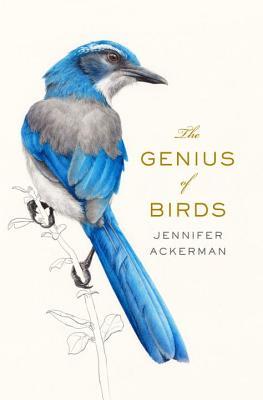 The Genius of Birds by Jennifer Ackerman
An interesting survey of recent worldwide research in ornithology with particular attention to the function of the brains of birds. Not too technical, she is an entertaining writer.
Advance review copy.
Coincidentally, I ran across this online article Power to the Bower: A Bird’s Architectural Method of Seduction by Osman Bari. Bowerbird (family Ptilonorhynchidae) building habits is one of the topics Ackerman discusses.

The Reader by Bernhard Schlink; Carol Brown Janeway (Translator)
Coming of age in Post World War 2 Germany. A young man is scarred for life by an inappropriate first affair. In later life he must face the collective guilt of his nation as his former lover is tried for war crimes.
(A library book sale bargain from their clear the tables day-- Five bucks for all the books you can fit in a large paper grocery bag. Yes, sir, yes, sir, two bags full.)
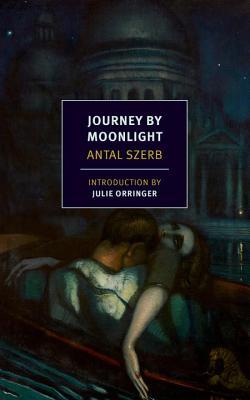
Journey by Moonlight by Antal Szerb, Len Rix (Translation)
A Hungarian on his honeymoon in Italy leaves his wife and wanders off perhaps to find some companions from his lost youth. Or maybe he's trying to escape the bourgeois life that is closing in on him. While he slinks around Italy (ending up in Rome) his abandoned wife joins a friend in Paris and tries to restart her life. All this is set in the period between the two world wars. A good story with lots of angst, strange characters, and touches of wry humor
 What are the Blind Men Dreaming? by Noemi Jaffe, Julia Sanches (Translation), Ellen Elias-Bursać (Translation)
I'll admit to being a bit disappointed when this came with my Deep Vellum subscription in September (2016). I just didn't want to read another concentration camp diary, so I set it aside (for nearly a year). I picked it up the other day and I'm glad I did; it is such a great book. Jaffe presents her mother, Lili Stern's diary which is brief and was not written in the camp. She wrote it immediately after she was liberated and was living in refugee camps in Sweden.
The real strength in the book is the daughter's commentary on the diary. She treats it as a memoir and as a springboard for a discussion on how her mother's ordeal affected her own life. But what I really found valuable was how she expanded the personal and specific into a more general discussion of how human traits and activities survive and are altered by horrific experiences. This is presented in a series of essay style entries on such topics as fate, cold, hunger, love, anger, desire, money, memory, desire, and others. She draws both on her mother's diary and writings of other survivors.
The book finishes with an essay by Jaffe's daughter Leda Cartum on how the legacy reaches into yet another generation.
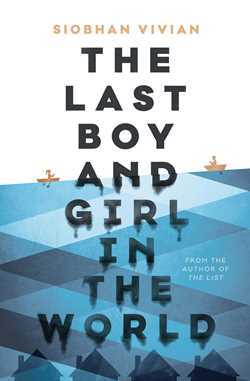
The Last Boy and Girl in the World by Siobhan Vivian
A teenage girl copes with with family, boyfriend, and BFF troubles against the backdrop of a community that must be abandoned because of a new dam. An uneven read. The characters were fairly well drawn. Unfortunately at the end everyone behaved totally out of character. The wrap-up was too simplistic for a complicated situation.
My least favorite read this week, but not a total waste of time.
Advance review copy.
And Only One Library book....
 A Gentleman in Moscow by Amor Towles (Kindle edition)
What a great way to survey the history of Communist Russia! This novel begins in 1922 when Count Alexander Rostov is sentenced to house arrest for life--in the elegant Moscow Hotel Metropol and ends in 1954. Although he can't leave the hotel, a cast of interesting characters--hotel employees and guests--keep him well informed about the goings on in the world. Rostov is a charming fellow and this is a charming book.
Shortly after I finished this book I found this delightful art work in The Calvert Journal. Witnesses to history: The turmoil of 1917 captured in children's drawings Text by Samuel Goff; Images taken from the book Moscow, 1917: Drawings by Child Witnesses. From the collection of the State Historical Museum in Moscow.
Other online reads...
Imagining the Future of Suburbia, From “Freedomland” to “McMansion Hell” by Kate Wagner
Georgia wins at Cannes for 6 Millionth Tourist Campaign
A great video from Georgia the country, not the US state.
Come for the Obscure Canadian Sport, Stay for the Buffet by Julie Stauffer
Who knew there is a sport called Crokinole?
The 'Mystery Boats' of Tresco Island essay by Mike Williams.
A bit of British WW2 espionage.
and, of course, the Deal Me In story.
|
| “Deal Me In 2017!” |
The card this week is the two of hearts which turned out to be impossible to use to illustrate the story of isolation, abuse, and anger that was somewhat randomly assigned to it when I set up my roster. So here's the story and the collection that contains it.
The Pedersen Kid by William H. Gass (in In the Heart of the Heart of the Country, and Other Stories)
Wow! This story left me more confused than anything I've read so far this year. And that's saying something since I'm currently reading Ricardo Fresán's thoroughly confusing The Invented Part.So to help me figure out just what happened in this story (or find out if I missed something) I searched for some commentary on it. Here are a couple of things I found, both pretty thorough and both convinced me that I actually "got" the story.
Let Me Make a Snowman: John Gardner, William Gass, and “The Pedersen Kid” by Nick Ripatrazone
The True Intruder in William H. Gass’s “The Pedersen Kid” by Ted Morrissey
Then I reread it for the writing: the amazing complex sentences that often lead to surprises; the sometimes devastating character descriptions; and the poetic, masterful prose.
I followed up by reading the other four stories in the collection: Mrs. Mean, Icicles, Order of Insects, and the title story. The Pedersen Kid appealed to me because of the interactions among the characters and its puzzling aspects. The title story had the richest language and was spot on in its descriptions of a dinky town. Mrs. Mean was, well, mean with a passel of (justifiably) ill behaved children and odd-ball neighbors (including the narrator). Icicles was cold and lonely. Order of Insects about a housewife and her fascination with an infestation of bugs was my least favorite.
The card: Can I find a Two of Hearts that fits a post modern story about a strange journey in the icy cold of North Dakota? Not really. But I did find an interesting deck.

"The name Maddeck - short for ‘Magicians, Astronauts & Dancers’ - is given after the first 3 dream jobs of the designer as a child."
The two of hearts is typical of the number cards in the deck, but the face cards are quite different in design--almost as if they are from a different deck.
more reading from my shelves....
Two Lines 23, by C.J. Evans (editor) The Fall 2015 edition of this bimonthly journal of The Center for the Art of Translation. It has fiction and poetry translated into English from eleven different languages. My favorite from this issue is The Piper by Yoko Tawada; translated from Japanese by Margaret Mitsutani. It is a retelling of the legend of The Pied Piper of Hamelin told from several points of view. The author is a Japanese writer currently living in Germany. She writes in both Japanese and German. Here is a link to the full Table of Contents for this issue.
The Genius of Birds by Jennifer Ackerman An interesting survey of recent worldwide research in ornithology with particular attention to the function of the brains of birds. Not too technical, she is an entertaining writer.
Advance review copy.
Coincidentally, I ran across this online article Power to the Bower: A Bird’s Architectural Method of Seduction by Osman Bari. Bowerbird (family Ptilonorhynchidae) building habits is one of the topics Ackerman discusses.
The Reader by Bernhard Schlink; Carol Brown Janeway (Translator)
Coming of age in Post World War 2 Germany. A young man is scarred for life by an inappropriate first affair. In later life he must face the collective guilt of his nation as his former lover is tried for war crimes.
(A library book sale bargain from their clear the tables day-- Five bucks for all the books you can fit in a large paper grocery bag. Yes, sir, yes, sir, two bags full.)
Journey by Moonlight by Antal Szerb, Len Rix (Translation)
A Hungarian on his honeymoon in Italy leaves his wife and wanders off perhaps to find some companions from his lost youth. Or maybe he's trying to escape the bourgeois life that is closing in on him. While he slinks around Italy (ending up in Rome) his abandoned wife joins a friend in Paris and tries to restart her life. All this is set in the period between the two world wars. A good story with lots of angst, strange characters, and touches of wry humor
What are the Blind Men Dreaming? by Noemi Jaffe, Julia Sanches (Translation), Ellen Elias-Bursać (Translation) I'll admit to being a bit disappointed when this came with my Deep Vellum subscription in September (2016). I just didn't want to read another concentration camp diary, so I set it aside (for nearly a year). I picked it up the other day and I'm glad I did; it is such a great book. Jaffe presents her mother, Lili Stern's diary which is brief and was not written in the camp. She wrote it immediately after she was liberated and was living in refugee camps in Sweden.
The real strength in the book is the daughter's commentary on the diary. She treats it as a memoir and as a springboard for a discussion on how her mother's ordeal affected her own life. But what I really found valuable was how she expanded the personal and specific into a more general discussion of how human traits and activities survive and are altered by horrific experiences. This is presented in a series of essay style entries on such topics as fate, cold, hunger, love, anger, desire, money, memory, desire, and others. She draws both on her mother's diary and writings of other survivors.
The book finishes with an essay by Jaffe's daughter Leda Cartum on how the legacy reaches into yet another generation.
The Last Boy and Girl in the World by Siobhan Vivian
A teenage girl copes with with family, boyfriend, and BFF troubles against the backdrop of a community that must be abandoned because of a new dam. An uneven read. The characters were fairly well drawn. Unfortunately at the end everyone behaved totally out of character. The wrap-up was too simplistic for a complicated situation.
My least favorite read this week, but not a total waste of time.
Advance review copy.
And Only One Library book....
A Gentleman in Moscow by Amor Towles (Kindle edition)What a great way to survey the history of Communist Russia! This novel begins in 1922 when Count Alexander Rostov is sentenced to house arrest for life--in the elegant Moscow Hotel Metropol and ends in 1954. Although he can't leave the hotel, a cast of interesting characters--hotel employees and guests--keep him well informed about the goings on in the world. Rostov is a charming fellow and this is a charming book.
Shortly after I finished this book I found this delightful art work in The Calvert Journal. Witnesses to history: The turmoil of 1917 captured in children's drawings Text by Samuel Goff; Images taken from the book Moscow, 1917: Drawings by Child Witnesses. From the collection of the State Historical Museum in Moscow.
Other online reads...
Imagining the Future of Suburbia, From “Freedomland” to “McMansion Hell” by Kate Wagner
Georgia wins at Cannes for 6 Millionth Tourist Campaign
A great video from Georgia the country, not the US state.
Come for the Obscure Canadian Sport, Stay for the Buffet by Julie Stauffer
Who knew there is a sport called Crokinole?
The 'Mystery Boats' of Tresco Island essay by Mike Williams.
A bit of British WW2 espionage.
Saturday, June 17, 2017
June (third week) 2017 Reads
Because I am slowly reading The Invented Part with Chad Post's Two Month Review project and have a couple of other slow reads going, I decided to devote this week's other reading and posting to whatever source or format the card of the week indicates. If it is Spades it will be translated into English; Hearts--original language English;
Diamonds--found on Project Gutenberg; Clubs--different format (narrative poem, short play or skit,
graphic, clever title, narrative essay, etc.); Jokers--Pick something
from another participants roster.
This week's story: Cafés Morts by Maïssa Bey; translated from the French by Hodna Bentali Gharsallah Nuernberg
A young girl inadvertently catches glimpses the culture of Algeria's "Moorish cafés" which at the time were men only gathering places.
This story is from the October 2016 issue of Asymptote a free quarterly online journal founded in 2011. They have published "...work from 105 countries and 84 languages, all never-before-published poetry, fiction, nonfiction, drama, and interviews by writers and translators such as J. M. Coetzee, Patrick Modiano, Herta Müller, Can Xue, Junot Díaz, Ismail Kadare, David Mitchell, Anne Carson, Haruki Murakami, Lydia Davis, Ann Goldstein, and Deborah Smith."
The layout is attractive. The stories and articles are illustrated and are available in the original language as well as the English translation. Many also have sound files of authors or translators reading in the original language. There are bios and translators notes. Past issues are archived. There is a map which shows the locales of the works.
~~~~
The Buenos Aires Review "presents the best and latest work by emerging and established writers from the Americas, in both Spanish and English [also some Portuguese]. We value translation and conversation. We publish poetry, fiction, essays, criticism, visual art, and interviews."
~~~~
Guernica/a magazine of global art & politics, a non-profit free online magazine founded in 2004. "A home for incisive ideas and necessary questions, we publish memoir, reporting, interviews, commentary, poetry, fiction, and multimedia journalism exploring identity, conflict, culture, justice, science, and beyond."
Material includes both translated and original English language works.
~~~~
Words Without Borders is a free monthly online magazine. Started in 2003, WWB publishes eight to twelve new works, in English translation, by international writers. Works include fiction, poetry and nonfiction, often related to a geographic or topical theme. Past issues are archived.
~~~~

This week's card is from Playing Arts Edition Zero, a deck for which "each card has been individually designed by one of the 55 selected international artists in his distinct style and technique."
The Four of Clubs was designed by Anton Repponen, a New York based interactive designer with architecture background.
I selected for today's post because it strikes me as a kind of translation from the usual playing card, giving us a new way to view a familiar object.
 |
| “Deal Me In 2017!” |
And the winner is
♠♠♠♠
Since it is a translated story in an online journal and is a four, I will highlight four online sources where I regularly read translated works and works about translation.
This week's story: Cafés Morts by Maïssa Bey; translated from the French by Hodna Bentali Gharsallah Nuernberg
A young girl inadvertently catches glimpses the culture of Algeria's "Moorish cafés" which at the time were men only gathering places.
This story is from the October 2016 issue of Asymptote a free quarterly online journal founded in 2011. They have published "...work from 105 countries and 84 languages, all never-before-published poetry, fiction, nonfiction, drama, and interviews by writers and translators such as J. M. Coetzee, Patrick Modiano, Herta Müller, Can Xue, Junot Díaz, Ismail Kadare, David Mitchell, Anne Carson, Haruki Murakami, Lydia Davis, Ann Goldstein, and Deborah Smith."
The layout is attractive. The stories and articles are illustrated and are available in the original language as well as the English translation. Many also have sound files of authors or translators reading in the original language. There are bios and translators notes. Past issues are archived. There is a map which shows the locales of the works.
~~~~
The Buenos Aires Review "presents the best and latest work by emerging and established writers from the Americas, in both Spanish and English [also some Portuguese]. We value translation and conversation. We publish poetry, fiction, essays, criticism, visual art, and interviews."
~~~~
Guernica/a magazine of global art & politics, a non-profit free online magazine founded in 2004. "A home for incisive ideas and necessary questions, we publish memoir, reporting, interviews, commentary, poetry, fiction, and multimedia journalism exploring identity, conflict, culture, justice, science, and beyond."
Material includes both translated and original English language works.
~~~~
Words Without Borders is a free monthly online magazine. Started in 2003, WWB publishes eight to twelve new works, in English translation, by international writers. Works include fiction, poetry and nonfiction, often related to a geographic or topical theme. Past issues are archived.
~~~~
This week's card is from Playing Arts Edition Zero, a deck for which "each card has been individually designed by one of the 55 selected international artists in his distinct style and technique."
The Four of Clubs was designed by Anton Repponen, a New York based interactive designer with architecture background.
I selected for today's post because it strikes me as a kind of translation from the usual playing card, giving us a new way to view a familiar object.
Saturday, June 03, 2017
June (first week) 2017 Reads
Since I usually post on Saturdays and this Saturday is June Third, I'm labeling this June even though the week has more May days than June ones.
Story: The Relive Box by T. Coraghessan Boyle (in Watchlist : 32 stories by persons of interest)
What would you watch if you had a magic box that allowed you to relive episodes from your past? Would you choose happy times, bad times, erotic times? And how addictive could it be?

Card: Four of Hearts
In the story, the box display "...isn't a computer screen or a hologram or anything anybody else can see--we're talking retinal projection, two laser beams fixed on two eyeballs. Anybody coming into the room...will simply see you sitting there silently in a chair with your retina lit like furnaces."
(Card found on playingcard collector)
some stories online...
The Scent of Paradise and Oussama Two stories from Another Morocco by Abdellah Taïa; translated from the French by Rachael Small. "These are stories of life in a working-class Moroccan family, of a writer's affair with language, & much more."
Toward Marzahn: A Story by Bae Suah ; translated from the Korean by Annah Overly
From the translator's introductory paragraph: "With its shifting timeframes, ambiguous narrator, and apartment empty except for small traces of previous inhabitants, Bae’s “Toward Marzahn” perfectly depicts a hypnagogic atmosphere unlike any other. Marzahn is not in Korea but rather a corner of Berlin, a city where Bae has spent long stretches of time, and her words give life to this realm far removed from her Korean readers’ homeland. Yet the loneliness of these characters never feels foreign or unfamiliar. Rather, it transplants Bae’s readers to her reality, which her critics have hailed as “a world of dreams . . . through which lost voices drift.”
The Size of Things, by Samanta Schweblin; translated from the Spanish by Megan McDowell
A toyshop keeper acquires an unusual helper.
Labrador by Daniel Dencik; translated from the Danish by Mark Mussari
"We’d always put off any proper introduction to each other’s parents, because we had enough problems of our own without complicating matters even further. If you’re going to introduce someone to your family, you better be sure."
other online reading...
Lessons in Slowness by Susanna Basso; translated from the Italian by Matilda Colarossi
An essay on the role of patience when doing literary translation. "I began to wonder if translation was, in fact, a waiting game."
A Brief History of a Decline: The Iranian Novel at the Dawn of the Millennium by Amir Ahmadi Arian an Iranian novelist and journalist.
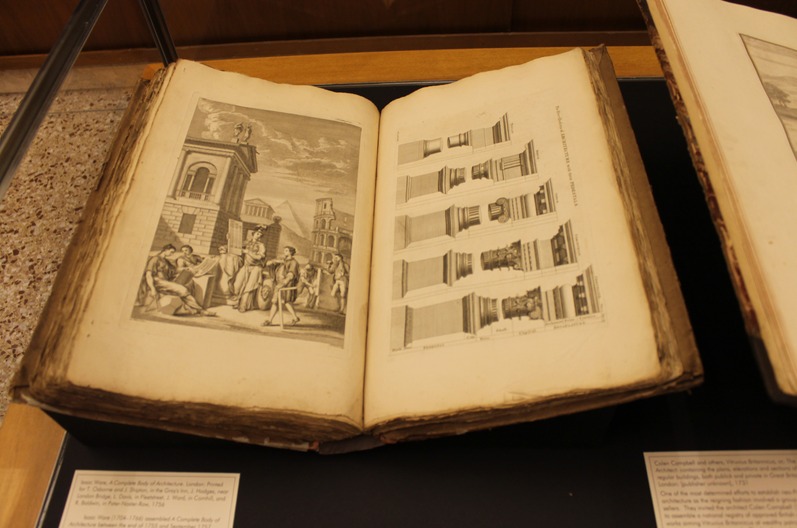 Read Dozens of Historical Architecture Books for Free Online Thanks to New Library Exhibition
"Buffalo and Erie County Public Library of Buffalo, New York, has recently opened a new exhibit at their Central Library titled Building Buffalo: Buildings From Books, Books From Buildings. The exhibit will feature a large selection of rare, illustrated architectural books from the Library’s collection dating from the fifteenth century to the mid-twentieth century. The bonus for those who are geographically distant from Buffalo is that, as part of the exhibit, the Library has also made dozens of historical architecture books available online, completely digitized and free to the public." Article includes highlights and photos of the exhibition. The list of online books (with links) can be found here. (warning: PDF)

Inside the Bizarre Personal Lives of Famous Architects by Megan Fowler
Gossipy paragraphs about five mega-star architects with some links to more information. Fun illustrations.
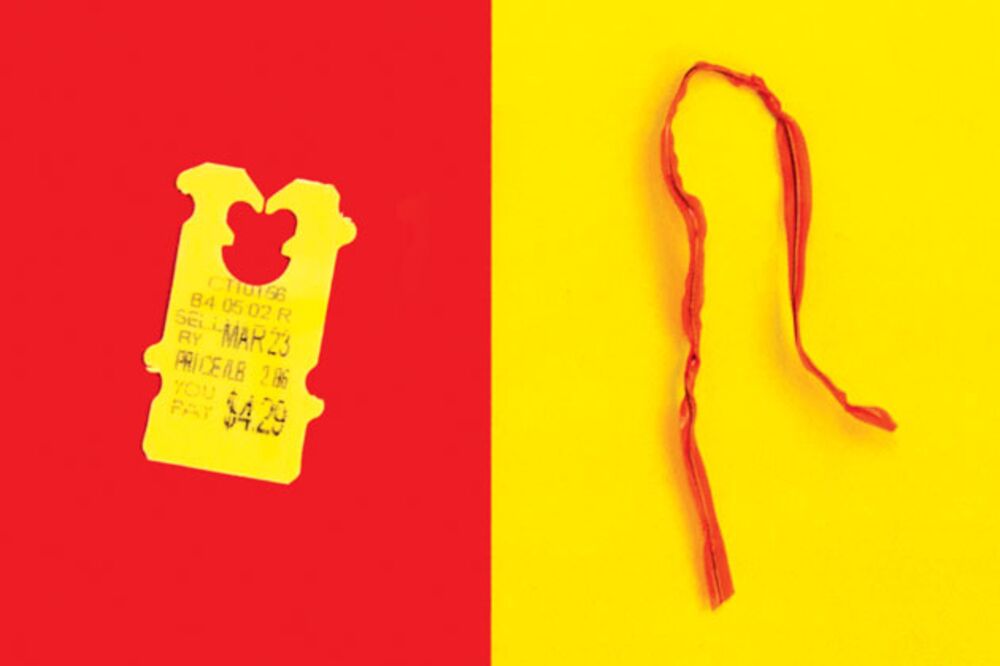
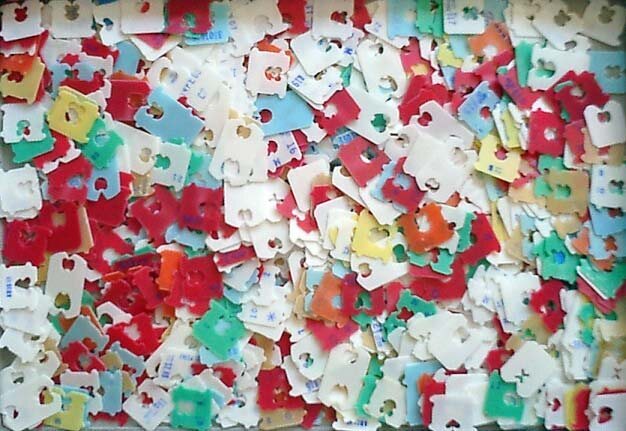 Most of the World’s Bread Clips Are Made by a Single CompanyA brief history of the Kwik Lok Closure. by Eric Grundhauser
and
Twist-Ties vs. Plastic Clips: Tiny Titans Battle for the Bakery Aisle
by Paul Lukas
from my shelves...
 Landscape in Concrete by Jakov Lind; Ralph Manheim (Translator); Joshua Cohen (Introduction)
A tragic/comedic tale of the absurdity of war told from the prospective of Bachmann, a WW2 German soldier, the survivor of a devastating battle where almost his entire regiment was lost in the mud of the Eastern Front. He is declared mentally incompetent and is set for discharge. He runs away and tries to find his regiment. Strange adventures ensue with an assortment of odd characters: a poisoner/deserter, a homosexual officer, a deranged former schoolteacher turned double agent, Bachmann's large girlfreind, an odd judge, Gypsy musicians.... I must read more by this author.

 |
| “Deal Me In 2017!” |
What would you watch if you had a magic box that allowed you to relive episodes from your past? Would you choose happy times, bad times, erotic times? And how addictive could it be?
Card: Four of Hearts
In the story, the box display "...isn't a computer screen or a hologram or anything anybody else can see--we're talking retinal projection, two laser beams fixed on two eyeballs. Anybody coming into the room...will simply see you sitting there silently in a chair with your retina lit like furnaces."
(Card found on playingcard collector)
some stories online...
The Scent of Paradise and Oussama Two stories from Another Morocco by Abdellah Taïa; translated from the French by Rachael Small. "These are stories of life in a working-class Moroccan family, of a writer's affair with language, & much more."
Toward Marzahn: A Story by Bae Suah ; translated from the Korean by Annah Overly
From the translator's introductory paragraph: "With its shifting timeframes, ambiguous narrator, and apartment empty except for small traces of previous inhabitants, Bae’s “Toward Marzahn” perfectly depicts a hypnagogic atmosphere unlike any other. Marzahn is not in Korea but rather a corner of Berlin, a city where Bae has spent long stretches of time, and her words give life to this realm far removed from her Korean readers’ homeland. Yet the loneliness of these characters never feels foreign or unfamiliar. Rather, it transplants Bae’s readers to her reality, which her critics have hailed as “a world of dreams . . . through which lost voices drift.”
The Size of Things, by Samanta Schweblin; translated from the Spanish by Megan McDowell
A toyshop keeper acquires an unusual helper.
Labrador by Daniel Dencik; translated from the Danish by Mark Mussari
"We’d always put off any proper introduction to each other’s parents, because we had enough problems of our own without complicating matters even further. If you’re going to introduce someone to your family, you better be sure."
other online reading...
Lessons in Slowness by Susanna Basso; translated from the Italian by Matilda Colarossi
An essay on the role of patience when doing literary translation. "I began to wonder if translation was, in fact, a waiting game."
A Brief History of a Decline: The Iranian Novel at the Dawn of the Millennium by Amir Ahmadi Arian an Iranian novelist and journalist.
Read Dozens of Historical Architecture Books for Free Online Thanks to New Library Exhibition "Buffalo and Erie County Public Library of Buffalo, New York, has recently opened a new exhibit at their Central Library titled Building Buffalo: Buildings From Books, Books From Buildings. The exhibit will feature a large selection of rare, illustrated architectural books from the Library’s collection dating from the fifteenth century to the mid-twentieth century. The bonus for those who are geographically distant from Buffalo is that, as part of the exhibit, the Library has also made dozens of historical architecture books available online, completely digitized and free to the public." Article includes highlights and photos of the exhibition. The list of online books (with links) can be found here. (warning: PDF)

Inside the Bizarre Personal Lives of Famous Architects by Megan Fowler
Gossipy paragraphs about five mega-star architects with some links to more information. Fun illustrations.
 Most of the World’s Bread Clips Are Made by a Single CompanyA brief history of the Kwik Lok Closure. by Eric Grundhauser
 and
Twist-Ties vs. Plastic Clips: Tiny Titans Battle for the Bakery Aisle
by Paul Lukas
from my shelves...
Landscape in Concrete by Jakov Lind; Ralph Manheim (Translator); Joshua Cohen (Introduction)A tragic/comedic tale of the absurdity of war told from the prospective of Bachmann, a WW2 German soldier, the survivor of a devastating battle where almost his entire regiment was lost in the mud of the Eastern Front. He is declared mentally incompetent and is set for discharge. He runs away and tries to find his regiment. Strange adventures ensue with an assortment of odd characters: a poisoner/deserter, a homosexual officer, a deranged former schoolteacher turned double agent, Bachmann's large girlfreind, an odd judge, Gypsy musicians.... I must read more by this author.
Subscribe to:
Posts (Atom)