Showing posts with label plays. Show all posts

Saturday, January 14, 2017

January (second week) 2017 Reads

Snow, snow, snow
Read, read, read
Eat, eat, eat
Sleep, sleep, sleep
Sun, sun, sun
Read!

This week I finished another of my Christmas gift books, almost finished a second one, continued with Pushkin, and did a lot of online reading. (I found some fun things, much of it through blogs I follow.) I also started a real chunkster--4 3 2 1 by Paul Auster, which weighs in at 880 pages (and this is a paperback ARC). Haven't read very far, but am liking it. 

The gift I finished:
Girlfriends, Ghosts, and Other Stories; Robert Walser, Tom Whalen (Translator) (Kindle ed)
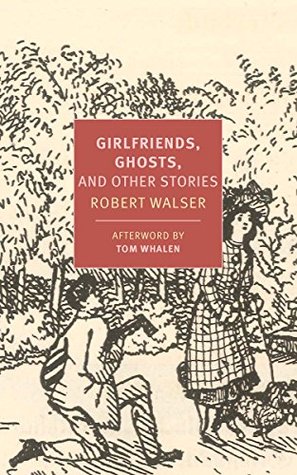
Very short stories and sketches (flash fiction?): little nibbles, each a delight to savor and digest.These little morsels are not to be gobbled up, there is a lot of wordplay, gentle satire, sarcasm, and subtlety that requires more than casual reading. To quote Walser himself "To treat food attentively enhances its value"  (in Something About Eating).

The translator's Afterword is more like a full meal. It is an informative essay with biographical material, a discussion of Walser's critics, comments on the challenges of translation, and more. The book concludes with a comprehensive list of Walser's works available in English translation.


The gift I almost finished:
Long Belts and Thin Men: The Postwar Stories of Kojima Nobuo; Nobuo Kojima, Lawrence Rogers (Translation)
American Occupied Japan is one of my favorite areas of reading, so this is a book I'm really enjoying. I've read all but one of the stories. Since I put that story on my Deal Me In 2017 Roster I won't be finishing the book until I pull the six of spades.

More Pushkin: (for a full list of the contents of the volumes I've been working with see my post
Pushkin - Contents notes
From: The works of Alexander Pushkin : lyrics, narrative poems, folk tales, plays, prose; selected and edited, with an introduction, by Avrahm Yarmolinsky.  (Random house, 1936)

  The Covetous Knight (play, p 412-427) translated by A.F.B. Clark
  Lyric Poems and Ballads, (p 50-90) various translators (an oopsie here because I got carried away with reading and ended up reading something from my Deal Me In Roster)
  Eugene Onegin (p 111-311) translated by Babette Deutsch

From: The Little Tragedies; by Alexander Pushkin; translated and with introduction and critical essays by Nancy K. Anderson.  (Yale University Press, 2008)
   A Feast During the Plague (play)

Online (Spent most of Sunday with these gems before getting back to books. 
Some days are like that.)
 

The Giving Up Game by Rowan Hisayo Buchanan
A young woman tutors the teenage son of a famous actress. The story was ok, but I'm not sure what it wanted to say.  This was my second selection from my Deal Me In 2017 Roster Odd two Jacks in a row.


This weeks card:  The Valet de Cour from a pack of French Cards, of the time of Henry IV. Found in Facts and Speculations on the Origin and History of Playing Cards by Chatto (Project Gutenberg)


California by Amanda Fletcher
Asian Pears and Red Azaleas by Gwen Francis-Williams
Two daughters remember their mothers. Fletcher covers a period of years, while Francis-Williams focuses on a single event.Both very good stories.
  From Hippocampus Magazine "an exclusively online publication set out to entertain, educate and engage writers and readers of creative nonfiction. "

A Hard-Boiled Slang Glossary for Something More Than Night  by Ian Tregillis
Tregilles put together a glossary of over 750 terms as preparation for writing one of the characters in a novel. He has published the document on his website. Such fun to browse.

Nameplate Necklaces: This Shit Is For Us by Collier Meyerson
I'll put this one in my "I didn't know that" file. A friend of mine who died in 2001 wore one of these.  She was Latina but I had no idea that nameplate necklaces were an ethnic thing.


Changing of the Tide: The Galician Sisters Chipping Away at the Patriarchy, One Barnacle at a Time.  by Matt Goulding, Slate; adapted from Grape Olive Pig: Deep Travels Through Spain's Food Culture, Harper Wave; 2016 

I enjoyed this essay about barnacle harvesting so much that I have requested the book from library.

Photo by Michael Magers


The Wards of Old London: Fleet Street - Wordsmiths, Pubs, and an Unexpected Ghost by Mark Patton
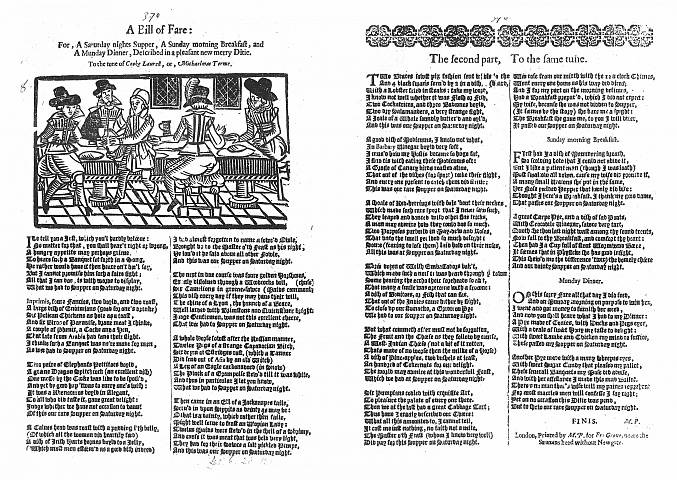
This is a series I have been following for some time; it's always interesting and I learn a lot from it. One thing I learned from this post is that the University of California at Santa Barbara (UCSB) maintains an English Broadside Ballad Archive "Making broadside ballads of the seventeenth century fully accessible as texts, art, music, and cultural records."


A Bill of Fare: / For, A Saturday nights Supper, A Sunday morning Breakfast, and / A Munday Dinner, Described in a pleasant new merry Ditie.
A delightful meal--this link is to the recording on the  UCSB archive mentioned above. There is also a text transcription of the lyric. What a great resource!


Crawfie and The Little Princesses by Linda Fetterly Root
Linda Root hit the mark with me with this informative essay on one of my childhood favorite books. Like Linda Root, the book made me fascinated with the Royals, but it also made me interested in reading biography.
A helpful librarian aimed me toward another royal biography--one about Queen Liliʻuokalani of Hawaii. I have no idea which bio it was but is was one written for young people.


On the Arab page by Jonathan Guyer
"Much connects art and comics in Egypt and the wider Middle East, even if publishing houses keep fine art and graphic narratives on different shelves." A discussion of the development of Arab comics in Egypt and their connection with fine art. This one had me making a list of things to Google.

Illustration “Self portrait with Spider”, 1945, Adham Wanly
Abushâdy archive



The Long, Unusual History of the Pickled Cucumber by Ernie Smith
The focus here is on the commercial history of the pickle in the USA. There are lots of links to follow if you want to know more about the salty, crunchy snack.


Poor Nancy Young, the Suspected Teen Vampire of Rhode Island A graphic history of an 1827 exhumation by Jamison Odoneby Ernie Smith
Oh my, sometimes the Atlas Obscura email newsletter has nothing of interest to me, then there is a day like Tuesday that brings pickles (above) and gruesome "comics."
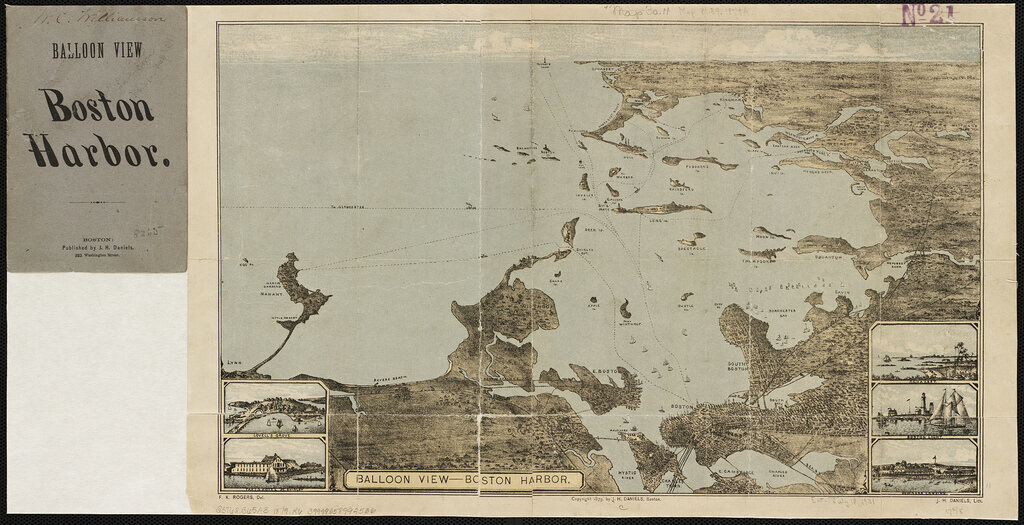


The 'Balloon Maps' That Aided Exploration, War, And Tourism by Cara Giaimo
Another from Atlas Obscura. Do they know I love pickles, graphics, & old maps?


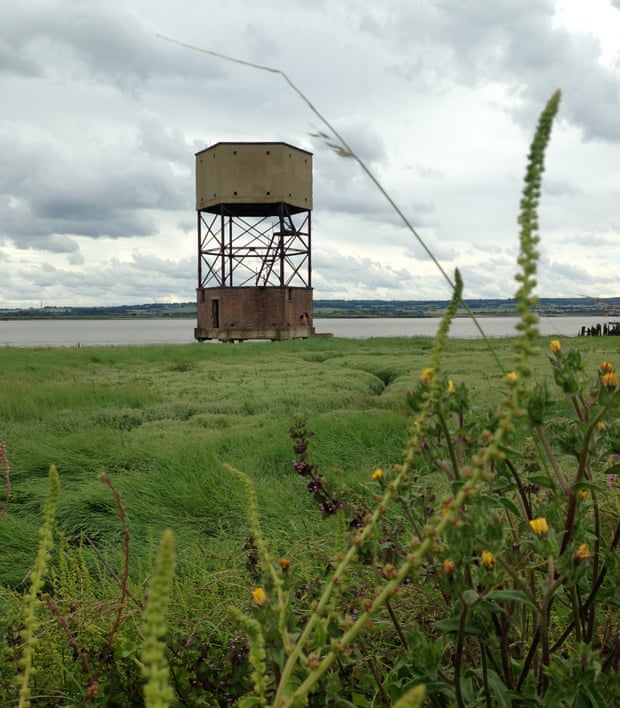
The Broomway is known as the most perilous path in Britain – "and is a favourite walk of writer Robert Macfarlane, who describes it in this adaptation from his book The Old Ways." A close up look at one of the features of the Thames Estuary. This one with georgous photographs. (see my post January (first week) 2017 Reads for more on the estuary)


This 3,500-Year-Old Greek Tomb Upended What We Thought We Knew About the Roots of Western Civilization. The recent discovery of the grave of an ancient soldier is challenging accepted wisdom among archaeologists. By Jo Marchant; Photographs by Myrto Papadopoulos. Smithsonian.com


And now--back to Pushkin and Auster....

Saturday, January 07, 2017

January (first week) 2017 Reads

This month I'm publishing my Reads posts weekly because...
The weather has been cold and snowy so I've been reading a lot this week. I finished one of my Christmas gifts, read some classics, read a YA,  read a bunch of short stories (online and in my Christmas gift books), read some essays online, and watched a lecture.

The gift I finished:
 
Estuary: Out from London to the Sea by Rachel Lichtenstein
An exploration of the Thames Estuary told in segments covering a period of about five years. Rachel Lichtenstein explores by boat and by land, meeting a lot of interesting people and hearing great stories along the way. She goes to the old defensive towers in the sea, she visits beaches and mudflats, she goes along with cockle gathers, she visits the new London Gateway Port, she explores nature preserves, she spends some terrifying bad weather nights on boats, and she listens and retells tales of the region. There are a lot of photos (black and white) and nice end maps. This is one of those books that causes extensive Googling. An excellent adventure by a hardy soul.


Heart of Darkness, by Joseph Conrad
It's about time I read this. I decided to read it now because Conrad is quoted in the above work (he lived in Kent near the Thames) and the narrator in the novel tells his story of the Congo to his friends while on a boat moored in the Thames.
I read this on Project Gutenberg.

I have been reading some Pushkin... (for a full list of the contents of the volumes I've been working with see my post Pushkin - Contents notes )
The works of Alexander Pushkin : lyrics, narrative poems, folk tales, plays, prose / selected and edited, with an introduction, by Avrahm Yarmolinsky.  (Random house, 1936)
This is not the complete short works, but there is plenty to read. This is a library book so I probably won't read the whole thing.
So far I've read:
  The Tales of Belkin  translated by T. Keane, revised by Yarmolinsky (pp 467-555) Five stories of rural life: The Shot, The Snowstorm, The Undertaker, The Postmaster, Mistress into Maid.
  The Queen of Spades (pp556-589). Also translated by Keane.
  Mozart and Salieri (play, pp 428-437) Translated by A.F.B. Clark

The YA novel..
Burned (Burned #1) by Ellen Hopkins
A coming of age story of a seventeen year old Mormon girl who has an unhappy family life. When she rebels against the church and her abusive father she is sent away to a ranch near Ely, Nevada to live with an aunt. Her story is told in verse format, which I found appealing. I may read more by Hopkins.
Read free online at Simon & Schusters' Riveted website


online
Secret Coders: Lost & Found by Gene Luen Yang and Mike Holmes
A short comic in which a group of kids figure out how to do an aerial grid search for a lost dog. A simple lesson in logic and coding. A very light one for my first read for the Deal Me In Challenge.
10 Outstanding Short Stories To Read in 2017
Mumbai-based writer-filmmaker Pravesh Bhardwaj says "I’ve been doing this for some time now — seeking out short stories from free online resources, and sharing them on Twitter (#fiction #longreads). It’s now a habit: Every night after dinner, before I start writing (screenplays), I look around for a story and read it."  She shares a list of ten of her favorites on Longreads.


Andrew Joyce on Sand Paintings
While hitchhiking when he was a young man, the author had a chance encounter with a sand painter. I loved this memoir/story which he shared as a guest poster on A Bookish Affair blog. It includes a few examples of sand paintings. He is the author of Yellow Hair, a fact-based work of fiction about the Sioux Nation.


The delta on London’s doorstep: a walk around the Thames estuary by Joanne O'Connor
This write-up from The Guardian travel section is nicely illustrated with photographs and has links to some of the sights and establishments along the way. It makes a nice companion piece to Estuary: Out from London to the Sea by Rachel Lichtenstein which I have been reading.


"Hardcore Heritage": RAAAF Reveals Its Latest Experiment in Historical Preservation
One approach to dealing with abandoned architectural sites. "The multidisciplinary Amsterdam-based studio Rietveld-Architecture-Art-Affordances (RAAAF)... proposes to make history tangible by altering...decaying structures in a way that makes their stories plainly visible."


The Destruction of Cultural Heritage: Project Description by Pamela Karimi and Nasser Rabbat
The project is a series of essays (available free online) which "...illuminate the larger contexts—historical, political, and ideological—within which the destruction of Middle Eastern monuments has taken place and acquired meaning over the last two centuries." I will be reading these over the next few weeks.
   The Demise and Afterlife of Artifacts by Pamela Karimi and Nasser Rabbat
This is the introductory essay of the above project. An overview of the problem, previews of the essays, plenty of illustrations, footnotes, & links.

 
Architecture for the Search for Knowledge
Video of Iñaki Ábalos' Walter Gropius Lecture at Harvard GSD Dives Into the History and Evolution of the Monastery. There is an accompanying text outlining the important point of the lcture. "Throughout the event, Ábalos delved into various mixed-use typologies, each of which is in some way related to the basic typology of the medieval monastery."Quote from beginning of lecture "It's a little bit boring but I like it." I was not boring to me.

Friday, December 30, 2016

December (second half) 2016 Reads

I  read a few things Christmasy which I note in a separate post: Christmas Reading.

I continue to work on my owned-but-unread stack but I also added to it with some nice Christmas gifts (I've already started the first three.):
Girlfriends, Ghosts, and Other Stories; Robert Walser, Tom Whalen (Translator)
Long Belts and Thin Men: The Postwar Stories of Kojima Nobuo; Nobuo Kojima, Lawrence Rogers (Translation)
Estuary: Out from London to the Sea; Rachel Lichtenstein
The Naked Eye; Yōko Tawada, Susan Bernofsky (Translator)    
Africa39: New Writing from Africa South of the Sahara; Ellah Wakatama Allfrey (Preface), Wole Soyinka (Editor)

Also received a couple of ARCs and some subscription books. So the following reads didn't make much a dent--but still, only one library book.


A Greater Music by Bae Suah, Deborah Smith (Translator)
In the wandering of memories time has no real meaning and this is a novel of memories. It's difficult to follow the sequence of events as the narrator, a young Korean novelist, house sits in Berlin for her sometime boyfriend and recalls her relationship with the mysterious M--a woman who was her German tutor and lover. The writing is eloquent, especially when she thinks about music. I look forward to reading more by this author. My copy from a subscription to Open Letter Books; which will be publishing another Bae Suah book next fall. (Deep Vellum also has a Bae Suah book coming in the spring of 2017)

A Rogue by Compulsion by Victor Bridges
A classic spy story (and a good read) first published in 1915. Set mostly in London and the Thames Estuary although it starts out in Dartmoor Prison. Available free from Project Gutenberg, Amazon and others. 


Calligraphy Lesson: The Collected Stories by Mikhail Shishkin, Marian Schwartz (Translation), Leo Shtutin (Translation), Mariya Bashkatova (Translation), Sylvia Maizell (Translation)
This collection includes both fiction and essays. Shishkin talks about writing in exile, the inadequacies of language, and the impossibility of translation. Some of the material is memoir about growing up in the "slave state" that was the USSR. My copy via subscription to Deep Vellum press.  
Contents:  The half-belt overcoat / translated by Leo Shtutin -- Calligraphy lesson / translated by Marian Schwartz -- The blind musician / translated by Marian Schwartz -- Language saved / translated by Marian Schwartz -- Nabokov's inkblot / translated by Mariya Bashkatova -- Of saucepans and star-showers / translated by Leo Shtutin -- The bell towers of San Marco / translated by Sylvia Maizell -- In a boat scratched on a wall / translated by Marian Schwartz.


The Secrets of Flight  by Maggie Leffler
Secrets and lies are revealed as an eighty-seven year old women and a fifteen year old girl forge a friendship. They meet in a writers group and the young girl agrees to help the woman write a memoir about her time as a pilot during World War 2. I like the smooth way the narration moves between present events and the memories of the past. There are some surprises and some not-so-surprising revelations. As the older woman tries to unburden herself of what she once felt were necessary lies, the younger is getting caught up in her own "necessary" lies. An interesting cross generation story with perhaps one too many twists, but a nice read.  Advance review copy courtesy of the publisher.


Things We Lost in the Fire: Stories by Mariana Enríquez (translated from the Spanish - by the author?)
Superb collection of eerie short stories, some are frightening -bordering on  horror. Domestic violence, hallucinations, ghosts, serial killers, etc. Not for the faint of heart. Wonderfully creepy. Terrific writing. Free advance reader copy (EPUB) from Penguin First to Read program.

Contents: The dirty kid - The inn -The intoxicated years - Adela's house - Spider web - End of term - No flesh over our bones - The neighbor's courtyard - Under the black water - Green red orange.

A Barcelona Heiress by Sergio Vila-Sanjuán; (translated from the Spanish, no translator credit given)
A sometimes confusing novel set in a confusing time just before the Spanish Civil War. Billed as "A historical detective story set against the social and political tumult of 1920s Barcelona and based on the real events...," it is more historical than detective. It's also very difficult to follow, but it does shed some light on Spanish history. Title and cover are a bit misleading--it's really more about the lawyer/journalist narrator than it is about his heiress friend.


The Cossacks by Leo Tolstoy; Louise Maude (Translator), Aylmer Maude (Translator)
To escape boredom (and his debts) a young Russian enlists as a cadet and secures a post in the Caucasus. He lodges with a village family and attempts to "go native and live the simple life." Wonderful descriptions of village life. An enjoyable read.  Library book.


Abandoned: Three Short Stories by Jim Heskett
Sex and drugs in two of these, but the middle one is different. Heskett writes noir mysteries and thrillers. I'm not sure I would want to read a full length novel by him, but the short stories are OK.
From my Kindle freebie collection.

Contents: To Build a Helicopter; The Meanings of Words; Shots and Strippers


online 
Number Six, Drama by José Ignacio Valenzuela; Translated from the Spanish by Aurora Lauzardo, Sofía García Deliz, and Edil Ramos Pagán.
In this micro-play a distrustful woman debates whether she ought to allow a stranger into her home. 

Carmen Boullosa: Raising Consciousness
The poet, novelist, and playwright is interviewed by Aaron Bady for Guernica magazine.

Human Hair, Dolls Clothes, Love Letters and Other Strange Things Found in Old Books
UVA's Book Traces Project tracks human interactions with physical books  By Emily Temple

For other stuff found in old books see used bookseller Michael Popek's blog Forgotten Bookmarks
Fun to browse, posts are nicely categorized by type of object.

The empire the world forgot text and photos by Joseph Flaherty
"Ruled by a dizzying array of kingdoms and empires over the centuries...the city of Ani once housed many thousands of people, becoming a cultural hub and regional power under the medieval Bagratid Armenian dynasty. Today, it’s an eerie, abandoned city of ghosts that stands alone on a plateau in the remote highlands of northeast Turkey...." Brief article with spectacular photographs of this city that was featured in the history of architecture class I took online.


Isthmus by Brian Davis, Rob Holmes & Brett Milligan
"The shockwave of Panama Canal expansion is reshaping cities throughout the Americas. We need to look through the lens of landscape, not logistics." The far reaching economic, ecological, and cultural effects of the expansion. For example: United States ports are expanding their facilities to accommodate post-Panamax shipping. [Map by the authors]


Architecture's "Political Compass": A Taxonomy of Emerging Architecture in One Diagram
by Alejandro Zaera-Polo & Guillermo Fernandez Abascal
It's a complicated -but interesting- diagram and the explanation of how and why they did it gives some insight into current trends in architecture.

Thursday, December 15, 2016

December (first half) 2016 Reads

Some really good reading both in books and online.


The Journey by Sergio Pitol, George Henson (Translation)
Pitol's musings on visiting Russia and Georgia in 1986. Marvelously informative and amusing. And, as with my previous Pitol reading, it had me Googling to find more about the people and places he discusses. (See my post More Pitol readings )
My copy via my subscription to Deep Vellum Books.


THE INSPECTOR-GENERAL: A comedy in five acts By Nicolay Gogol; Translated by Thomas Seltzer.  A classic comedy of mistaken identity, corruption, pomposity, and other social nonsense. I was inspired to read because of the Pitol book. On Project Gutenberg


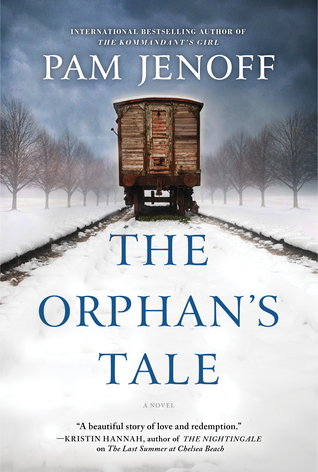
The Orphan's Tale by Pam Jenoff
Another WW2 novel--this one follows two female aerialists performing in a German circus in occupied France. One is a German Jew being hidden and protected by the circus. The other is a young Dutch woman who is caring for a Jewish baby she rescued. Well told story of a developing friendship, difficult choices, suspense, loss, and a kind of redemption.
Advance review copy.


My Wish List  by Grégoire Delacourt, Anthea Bell (Translation)
What would you do if you won the lottery? Would you change your life or not?  Jocelyne wins and doesn't know what to do so for a time she does nothing. But then.... A quick, light read which I enjoyed. My copy.


The Prophet of Zongo Street: Stories by Mohammed Naseehu Ali
Nice collection. Some are set in Ghana. Others are about Ghanaian immigrants in New York. All are filled with interesting characters, a bit of whimsy, superstition, and mischief. (warning some people might be put off by the sex in a couple of these)
Contents: The story of day and night; The prophet of Zongo Street; Live-in; The manhood test; The true Aryan; Ward G-4; Rachmaninov; Mallam Sile; Faith; Man pass man.
 
My copy was a library sale find--for 10 cents.A great buy.


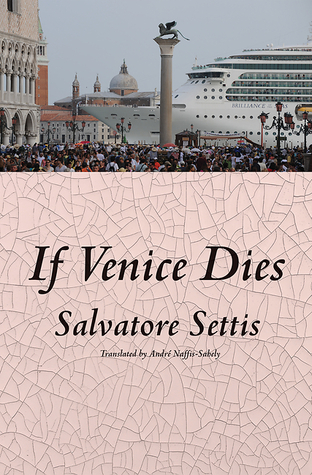
If Venice Dies by Salvatore Settis, André Naffis-Sahely (Translation)
Excellent examination of a number of issues facing the future of the historic city of Venice (and by extension other historic cities in the rest of Italy and the world). Tourism, declining population, political graft, corporate irresponsibility, and lack of architectural ethics are among the issues discussed. Settis also speaks on what it means to be a city. My copy through a subscription to New Vessel Press. 


Online
Finished the excellent online architectural history course which I started in October (see my post of October 15,2016).  I am so glad I signed up for the class. Among other things, it greatly enhanced my reading of  If Venice Dies.

Keeping the Foreign in Translated Literature: a Dispatch from the Oklahoma Prairie by George Henson

Hemingway vs. Ken Russell: Or Why You Should Compare Apples to Oranges  by Noah Berlatsky "...the differences and similarities lead you to ideas, and aesthetic perspectives, you might not have had otherwise."

Here's What Western Accounts of the Kowloon Walled City Don't Tell You  by Sharon Lam.
Population density in Hong Kong.

AD Classics: Royal Basilica of Saint-Denis / Abbot Suger  by Luke Fiederer
This went along quite nicely with one of the recent lectures in the online course I'm taking: A Global History of Architecture.

Concrete clickbait: next time you share a spomenik photo, think about what it means; Text by Owen Hatherley; Images by Jan Kempenaer.
A discussion of the strange World War Two monuments found in areas of the former Yugoslavia.


and finally...to end on a sweet? note...
A Perfume that Smells Like Poop?  By Bill Gates.  All in the name of research... 


Sunday, July 31, 2016

August (first half) 2016 Reads

Starting off August by trying to finish several in my "currently reading" list :

Rock, Paper, Scissors ; Aidt, Naja Marie    on page 109
What If the Queen Should Die? ; Flintoff, John-Paul  on page 131
The North Water ; McGuire, Ian  on page 56

I'm enjoying all of these, can't decide which to finish first, page numbers are as of 8am EDT, Aug 1.

10pm, Aug 1
Finished  What If the Queen Should Die? I enjoyed this historical novel--The Queen in the title is Queen Anne of England, Scotland and Ireland. The main protagonist is the writer Daniel Defoe acting as a spy for the Earl of Oxford during the Court intrigue over the line of succession.
My copy. Note: I am a contributor to this crowd sourced book, published by Unbound

I also read a few more stories in St. Louis Noir, an anthology I won on Library Thing. I started reading it in mid July.

5pm, Aug 2
Finished The North Water  It's not very good. I won a this ARC on Goodreads.

3pm, Aug 5
Needed something light after the gruesome whaling adventure. What better than an informative book on what goes into making bread in France: Bread of Three Rivers: The Story of a French Loaf  by Sara Mansfield Taber. My copy (picked up for a dime at a college book sale).

Aug 6
The Best Plays of 2014 (Best Plays of Year) by Lawrence Harbison (Editor)
Library book.
I read three of the six plays:
The Country House, by Donald Margulies. This was ok, but theater pieces about theater people just don't excite me.
Dinner with the Boys, by Dan Lauria. I liked this dark comedy about a most interesting dinner party. Of the plays in this collection, this is the one I'd most like to see performed.
Our Lady of Kibeho by Katori Hall. Based on real events, this is about schoolgirls in Rawanda having visions of Mary. This one made me head to the Web to find out more about the event.

The other three plays are:
Mala Hierba by Tanya Saracho, inspired by Latin American culture. I may get the book again to read this one.
When January Feels Like Summer by Cori Thomas, set in Central Harlem. Not interested in this
Year of the Rooster by Eric Dufault. A comic play about cockfighting, connections, and clawing your way to the top. I don't think I want to ever read this.

Aug 7
Finished  St. Louis Noir  edited by
I like this series from Akashic books. This one is pretty good with a mix of people--some skin-head vigilantes along with drug dealers, whores, ex-cons, guys evening scores and the other usual suspects . A couple of the stories are a bit self-conscious in trying to make sure people familiar with St Louis know for sure that the story is really set there. Too many street names--that sort of thing. Overall the anthology is quite good with thirteen stories with an interesting "poetic interlude" in the middle. There is also a map which is helpful.
Contents (I highlighted my favorites):
Introduction / Scott Phillips -- Part I: The city. Abandoned places / S.L. Coney -- Deserted cities of the heart / Paul D. Marks -- Blues for the River City / Colleen J. McElroy -- Fool's luck / La Velle Wilkins-Chin -- Attrition / Calvin Wilson -- Tracks / Jason Makansi -- Part II: A poetic interlude. Four St. Louis poems / Michael Castro -- Part III: The county. A paler shade of death / Laura Benedict -- Have you seen me? / Jedidiah Ayres -- A St. Louis Christmas / Umar Lee -- The pillbox / Chris Barsanti -- The brick wall / Lohn Lutz -- Part IV: Across the river. Tell them your name is Barbara / L.J. Smith -- One little Goddamn thing / Scott Phillips.
Free from publisher through LibraryThing

Aug 9
Finished Umami by


Rock, Paper, Scissors by


Laser Moose and Rabbit Boy by


e Boys in the Bunkhouse: Servitude and Salvation in the Heartland
by Dan Barry. Exploitation and mistreatment of intellectually impaired men.  Library book.

Aug 15
Finished You May Also Like: Taste in an Age of Endless Choice by

Monday, January 05, 2015

Distractions (Early January 1015 reads)

There were a lot of distractions that led me to detour from my published reading plan for January. Two were from browsing around Project Gutenberg:

The Pier-Glass by Robert Graves  (originally published in London by M. Secker, 1921) This is a collection of twenty-five poems:

    The Stake
    The Troll's Nosegay
    The Pier-glass

ROBERT GRAVES
(From a Painting by Benjamin Nicholson)
    The Finding of Love
    Reproach
    The Magical Picture
    Distant Smoke
    Morning Phœnix
    Catherine Drury
    Raising the Stone
    The Treasure Box
    The Kiss
    Lost Love
    Fox's Dingle
    The Gnat
    The Patchwork Bonnet
    Kit Logan and Lady Helen
    Down
    Saul of Tarsus
    Storm: at the Farm Window
    Black Horse Lane
    Return
    Incubus
    The Hills of May
    The Coronation Murder


The Burgomaster of Stilemonde by Maurice Maeterlinck
Translated by Alexander Teixeira de Mattos

This play portrays German atrocities during the First World War occupation of Belgium. An interesting find. Maeterlinck was from the Flemish part of Belgium, but he wrote in French. He was awarded the Nobel Prize in Literature in 1911.

When I was looking for biographical information om Maeterlinck, I found a resource that I didn't know about:

Kellscraft Studio which focuses "...on public domain books (anything published prior to 1923 in the U.S.), and we concentrate on books known for their wonderful illustrations and philosophy of life.  Some books at our site will have no illustrations, but are available here for their writing and importance.  All books published here are in the public domain and out of copyright, so are available to everyone to read, print and use in classroom settings."

I'm having a good time browsing the site even though the biography of  Maeterlinck there was written in 1911 so doesn't answer my question which had to do with Maeterlinck during the 1940s.

Another distraction was from Tracy L. Higley's video of Ephesus. It's a promo for her book So Shines the Night, but it's also a good travelogue. I especially enjoyed the brief look at the terrace houses. This area was not open to visitors when I toured in 1996. Makes me want to go back and it makes me want to do some web exploration.

Also online Pithead Chapel Volume 4, Issue 1
Three short stories, two essays. I especially liked "The Star Sisters" by Corinne Sullivan. This was not in the reading plan. My monthly reading plans should include the online journals I regularly read.

This next one was not on the reading plan, it was a carry-over from December which was resolved before I published the plan. By noon, 1 January 2015 I already had my first DNF for the year: Daisy Goodwin's The Fortune Hunter. Quit at page 159 (of 468). An advance review copy from the publisher. I am not going to review. Book is badly in need of a good edit. ' nuf said.
Gentlemen Scientists and Revolutionaries: The Founding Fathers in the Age of Enlightenment by Tom Shachtman.
I received a finished copy of this book from the publisher for review purposes.
(This is also a carry-over from December. I finished this one.)

I really liked this descussion of the contributions to science and technology by the founders of the United States and the role that science played in the success of the Revolution and the success of the new nation. Brief review cross posted on Goodreads and LibraryThing.

 
The Glass Kitchen: A Novel of Sisters by Linda Francis Lee
Library Book
I read this for one of my challenges and it was a real bummer. I reviewed it on January 4 on this blog (cross posted to Goodreads and LibraryThing).


And finally, a really grand distraction:

Just watched the DVD of The Grand Hotel Budapest and enjoyed it very much. I don't watch very many films, but I'm glad I watched this one.
Borrowed from local public library.

And someone served me tea while I watched it!