Saturday, April 08, 2017

April (first week) 2017 Reads

This week I read two superb novels, a mystery, a classic short story anthology, a couple of online things, and, of course, my weekly story for Deal Me In...

 “Deal Me In 2017!”
Story: Cosmo Girl by Nadia Villafuerte; Translated from the Spanish By Julie Ann Ward
"She picks up her suitcase. Gets in line. Shows her ticket without letting her fist tremble. Checks her luggage. They’re not going to stop me, she repeats silently until she finally settles into seat twenty-nine." Elena is on her way north to Juárez. She doesn't plan to cross the border--until the time is right. But even while still far south in Mexico the bus is stopped at internal checkpoints...

Card: Three of Spades from metrodeck a card deck "Printed on found and repurposed New York City subway fare cards, metrodeck attempts to visually capture the common thread between commuters, public transportation, and chance.
Every card has been gathered at random, after having been purchased, used, and discarded by either a visitor or resident of New York City. Some have been signed or otherwise marked, making each card unique with its own narrative potential."
OK so our story is set in Mexico, not New York City, and it's on a bus, not a train...but still the cautions on this card could apply to many forms of transportation. A bit of a stretch for a connection, but it's a cool concept deck. Follow the "process" link on the metrodeck site menu for some neat pictures of how the cards are made.

from my "owned-but-unread" shelf...


Eve out of Her Ruins by Ananda Devi, J.M.G. (Introduction), Translated from the French by Jeffrey Zuckerman
An absolutely stunning, crushing story of four teenagers in an impoverished area of Port Louis, Mauritanius. Lyrical first person narrations alternate between two girls and two boys as they tell a tale of sex and violence that can only end in tragedy. 
My copy from Deep Vellum subscription.
Cover design by Anna Zylicz
On the Best Translated Book Award (BTBA) Longlist 2017


Chronicle of the Murdered House by Lúcio Cardoso,  (Translated from the Portuguese by Margaret Jull Costa and Robin Patterson; Introduction by Benjamin Moser
A classic family tragedy played out in a crumbling villa. Beautifully told through multiple points of view in a series of documents (letters, diaries, statements, reports).
My copy from Open Letter Press subscription.

On the Best Translated Book Award (BTBA) Longlist 2017


A note about Best Translated Book Award (BTBA) Fiction Longlist 2017:
It's a terrific list. So far I have read five -- the above two and A Spare Life, Umami, and Oblivion. 
No way can I say one of these is better than the others.
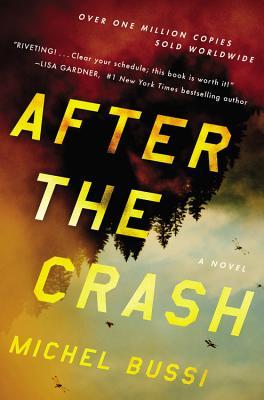


After the Crash by


Gutenberg find... 

Brazilian Tales by Albuquerque, Coelho Netto, Dolores, and Machado de Assis Translation and Introduction by Isaac Goldberg (Published in 1921 by The Four Seas Company, Boston, Massachusetts)

Contents: Preliminary Remarks: An overview of the state of Brazilian literature (in 1921) as well as information on the writers in this collection.
  The Attendant's Confession By Joaquim Maria Machado De Assis: Murder of self-defense?
  The Fortune-Teller By Joaquim Maria Machado De Assis: a story of a love triangle.
    Life By Joaquim Maria Machado De Assis: a dialog between Ahasverus (The Wandering Jew) who is the last mortal on Earth and Prometheus.
    The Vengeance Of Felix By José Medeiros E Albuquerque: "Old Felix had followed his trade of digger in all the quarries that Rio de Janeiro possessed. He was a sort of Hercules with huge limbs, but otherwise stupid as a post." Or was he?
    The Pigeons By Coelho Netto: "When the pigeons leave, misfortune follows.—Indian superstition."
    Aunt Zeze's Tears By Carmen Dolores: An old-maid faces reality.

online...


Build Your Own Pizza Oven: The Crust-Worthy Guide You Didn't Know You Kneaded an exercise for architecture students, complete with plans and instructions.
I'm not going to build one, but if I were ever build anything out of brick and mud this is a thing I would build...

But I wouldn't drink Bone Sake with my pizza...


Bone Sake Michael Pronko, a long time resident of Japan, meets his match in a drink that "...brought me closer to the essence of bone, a place I wasn’t sure I wanted to be."

Pronko is the author of three mystery/thrillers (set in Tokyo) and three collections of essays on Japan. In addition to his writer blog, he (along with Marco Mancini) runs the blog Jazz In Japan which features news, reviews, articles, club and venue information, and other related things.

Saturday, April 01, 2017

March (fifth week) 2017 Reads

So March had almost five weeks this year? No wonder I got so tired of it. It's Madness, I tell you!

Speaking of madness I'm watching NCAAW games so not reading as much as usual...
 ...but...
          ...somewhere in the madness...
               ...I read two very fine novels, a good short story collection...
                     ...and... 
                           ...found time to shuffle up and pull a card for the Deal Me In story challenge...

 “Deal Me In 2017!”
The story: It's me! by Ekaterina Togonidze (in Best European fiction 2015) Translated from the Georgian by Natalia Bukia-Peters and Victoria Field.
Iamze/Ia/Ianna/Yanna has her appearance changed through major and minor cosmetic surgeries--but does she still have a soul?


The card(s): The Queen of Spades: These are from a page of Queens of Spades on Playing Arts. Viewers were asked to vote for their favorite. The vote has ended but there are lots of neat card designs to view.  I had a difficult time choosing one for this story. The Pichardo one shows a dramatic transformation and the Mancini suggests the loss of soul. Googling for this card was a neat exercise during NCAA Women's Tournament game time outs--when I was supposed to be walking laps around the house. 
Fabio Mancini

Marco Pichardo


from the Library...

Swing Time by Zadie Smith
Two brown girls grow up in Northwest London dreaming about the dance. One has talent, the other does not. But it takes more than talent--luck also plays a part and these girls aren't lucky. As they grow their paths split and their friendship dwindles. One pursues a short mediocre stage career and single motherhood. The other, who is the narrator of the story, becomes personal assistant to a highly successful pop star. But there is much more here than the fluctuating friendship: racism, patronizing do-gooders, unintended consequences of charity, rich vs poor, parenting styles, exploitation, immigration--all packed into a smoothly flowing package.


from my "owned-but-unread" shelf... 


The Ambassador by Bragi Ólafsson, Lytton Smith (Translator)
An Icelandic poet makes a trip to Lithuania to attend a poetry festival. Our poet tends to overthink everything--the buying of an overcoat, a stain on a carpet, the return of a videotape, other small things. But when it comes to the big things like plagiarism he seems not to have thought at all. In spite of (or, perhaps, because of) his ineptness his adventures are fun to follow. At times  Inspector Clouseau in a new role as petty thief comes to mind.


Project Gutenberg find... 


Lotta Schmidt and other stories by Anthony Trollope; fourth ed., Chapman and Hall, 1876 (first ed was 1867)

I enjoy Trollope's novels of English life and was happy to find this story collection. In these stories Trollope turns his wry eye to the international scene, they are a delight to read.

Contents: Lotta Schmidt in which a Viennese girl chooses between two suitors; in The Adventures Of Fred Pickering a young aspiring writer must choose between starvation and pride; The Two Generals is a story of brothers on opposite sides during the American Civil War; the next story is a humorous one where an Englishman has a traveler's worst night ever in an Irish village "hotel" but he meets and becomes friends with Father Giles Of Ballymoy; Malachi’s Cove is a place near Tintagel in Cromwell where an old man and his granddaughter gather seaweed until a neighbor intrudes on their territory; The Widow’s Mite is about charity and what we are willing to try to give up for a cause; The Last Austrian Who Left Venice is the story of a Venetian woman who falls in love with an enemy Austrian soldier; the question asked in Miss Ophelia Gledd is "Can an American woman be considered a "lady" in London society?; and in the final story, The Journey To Panama, there is a shipboard friendship between a man planing on crossing the Isthmus of Panama (no canal in those days) and on to Vancouver and a woman who is to meet her future husband after crossing the Isthmus.

Saturday, March 25, 2017

March (fourth week) 2017 Reads

Two super great novels, a non-fiction, a couple of literary journals, a Gutenberg find, and my weekly short story made up this week's reading.

 “Deal Me In 2017!”
In this week's short story, Ministry of the Interior by Louise Kennedy, a man in Beirut buries his pet cat with the help of some women friends. It's a rather sad affair and although he has prepared a nice buffet, the women can't wait to leave.
It is online at Short Fiction, a print and online journal, featuring excellent short stories from around the world.


This week's card, The Five of Hearts, is from the Marshall McLuhan Distant Early Warning (D. E. W.-Line) Card Deck, A deck of playing cards designed to be used as a problem-solving device. Published in 1969.

An essay about the deck may be found here and a complete set of DEW Line cards can be seen on Flickr at https://goo.gl/bvwVM7


from my "owned-but-unread" shelf...

A Spare Life
by Lidija Dimkovska, Christina E. Kramer (Translation from the Macedonian)
The separation of conjoined twins serves as a metaphor for the breakup of Yugoslavia, but it's a very strong story even if read as a straight narrative without the metaphorical stuff.

From my subscription to Two Lines Press


Anything Is Possible by Elizabeth Strout
In this collection of linked short stories, Strout expands on the lives of several people mentioned in My name is Lucy Barton. It stands alone, you don't have to have read Lucy Barton to appreciate these stories of small town life, love, and loss. Strout is one my favorite authors and this one does not disappoint. Loved it.

Advance review copy through GoodReads.


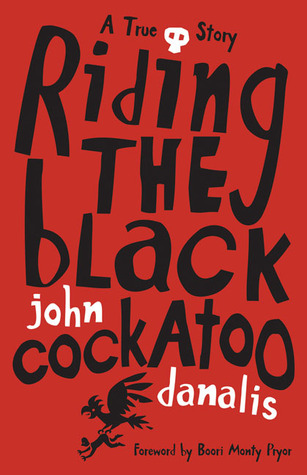
Riding the Black Cockatoo by John Danalis
The author gives an account of the process of returning a skull of an Australian Aborigine to its tribe. He goes into the difficulties encountered which include convincing his father of the necessity of repatriating the skull, finding the right authorities to receive it, working with elders to assure that the proper ceremonies are observed, and dealing his own psychological reaction to the atrocities that the native people of Australia have suffered over the years.

Not the greatest writing, but it does help to raise awareness.

My copy from a blog win at The Bookshelf Gargoyle

Literary journals...

Two Lines 26 by CJ Evans (Editor)
More information and Table of Contents  Some selections from this and previous issues are available online 
I am a subscriber.

New England Review, Vol. 37, No.3 (2016)
Publishes fiction, poetry, non-fiction, drama. This issue features a section of translations of current German poetry. Some material from past issues is available online (pdf). I rec'd this copy from a blog win at LitHub Daily.  More Information and Table of Contents 

Gutenberg find...

The American Railway : Its Construction, Development, management, and Appliances by Bogart, Clarke, others, and Voorhees (Originally published by Scribners' in 1889)
Over 400 pages of essays, pictures, charts, statistics, and more. A lot of it is rather dull, but there is plenty of interest especially to a researcher. It's worth a look just for the sketches, drawings, and photographs.
The chapter on "The Every-day Life of Railroad Men" is a gem with such insights as "Brakemen have had the reputation of doing a good deal of flirting, and many a country-girl has found a worthy husband among them; but there is not so much of this method of diversion as formerly; both passenger and freight men now have to attend more strictly to business, and they cannot conveniently indulge in side play. There are still, however, enough short branch-lines and slow-going roads in backwoods districts to insure that flirting shall not become a lost art in this part of the world."

Saturday, March 18, 2017

March (third week) 2017 Reads

This week, except for being snowed in on Tuesday and unable to get my car out on Wednesday, was a lot of fun. Or maybe it was fun because of the snow. Everything I read was rewarding--each in its own way.  Planes, trains, and automobiles in three of the four novels I read this week. The fourth was a math problem and the "story" of the week was a poem. Great cover art for all four novels.


 “Deal Me In 2017!”
This week's story is a poem:  ROY-G-BIV B/W by Charlie Clark (in Bat City review #8, published in 2012)
The title is made up of the initial letters of the colors in the color spectrum plus black and white. The poem has eight sections, one for each of the seven colors and one for B/W. In some sections the connection between the color and the text was clear to me, others, not so much so. I keep working on my understanding and appreciation for poetry, but it is still my hardest kind of reading.

Bat City Review "is an annual literary journal run by graduate students at the University of Texas at Austin, supported by the English Department and the James A. Michener Center for Writers." Poetry, Fiction, Non-fiction and Art are included.  I have two copies (#8 and #10) which I enjoy dipping into now and then. Good stuff.


This week's card: 5 of Clubs
I selected this card to go with this poem because it is so colorful and so hard to figure out.

It is by Mengying Wang, an artist and student in Beijing, China who goes by the user name overflow8 on Deviant Art.com and also on Tumbler.


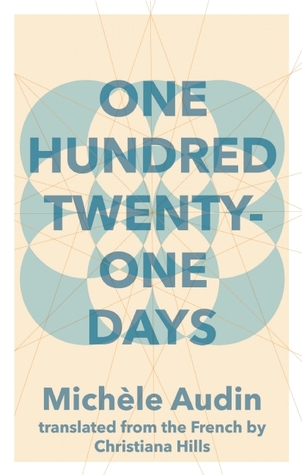
One Hundred Twenty-One Days by Michèle Audin, Christiana Hills (Translation)
A wonderful debut novel by mathematician and Oulipo member Michèle Audin. It tells the story of French mathematicians over several years (through WW1 & WW2) in a variety of ways: diaries, medical records, news reports, and other material from archives. Fictional and actual people are mingled (that led me to a few Googles). It's not necessary to know a lot of math, though that may help in some spots. I'm no math whiz and I loved the book. My copy from Deep Vellum subscription.


Dance of the Jakaranda by Peter Kimani
How great to have a novel of Kenya's history written by a Kenyan. This one is told from the prospective of the men (both the British overseers and the Kenyan and Indian workers) building the railroad from the coast to Lake Victoria. It's filled with well drawn characters and is a joy to read.
Advance review copy form LibraryThing

Cover Art Jitterbug II, 1941 by African American artist William H. Johnson   (Smithsonian American Art Museum)


The Lauras by Sara Taylor
A confusing road trip by a mother and her teenager. Two unreliable narrators as Alex, the teenager, tells the story including retelling the stories the mother tells along the way. Alex is not always a good listener and the stories aren't chronological. But it's not as much of a muddle as it could have been and it flows surprising well. Advance review copy won on LibraryThing.

Jacket design unattributed (this is an uncorrected proof copy so info is incomplete)


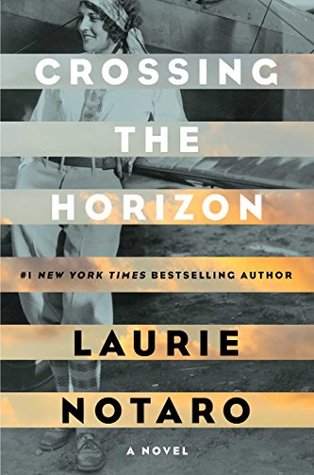
Crossing the Horizon by Laurie Notaro (Kindle ed)
Fictional account of the exploits of several pioneer women aviators (and passengers) as they attempted to be the first woman to fly across the Atlantic. An interesting and fun read although some of them didn't survive the trip. Notaro sticks fairly close to the facts. Each chapter is headed with an historic photo and they are fun.

Library book


Reading may be a bit sparser next week because of basketball...

Saturday, March 11, 2017

March (second week) 2017 Reads

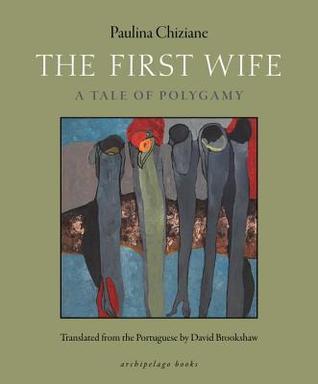
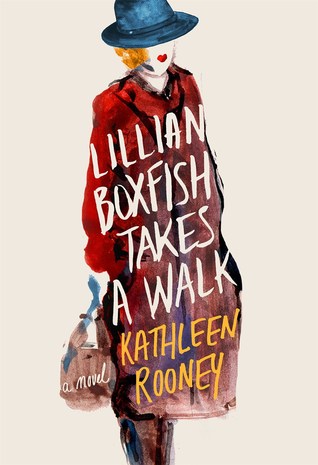
As I expected this was a "library reads" week with Travels with Herodotus, two Modiano novels, The First Wife: A Tale of Polygamy by Paulina Chiziane,  Lillian Boxfish Takes a Walk by Kathleen Rooney, and a cookbook (on Kindle).

 “Deal Me In 2017!”
Oh good, this week's card for Deal Me In is the King of  Diamonds. It's always fun to search the Net for a face card. This week's story comes from Project Gutenberg:  An Occurrence at Owl Creek, by Ambrose Bierce
A moving story of a military execution during the American Civil War.


The card: I looked for something from the period of the story, but most of the Civil War decks (for example this King of Diamonds) were commemorative ones produced on various anniversaries.

I kept looking for something more interesting and something actually printed in the 1860s. I found lots of pictures of soldiers playing cards, but few images of the actual cards.


Then I found this deck which was produced during the War, but it has no K of Diamonds because this deck was "...produced by the American Playing Card Company in 1862. The backs had an image of four American flags while eagles, flags, stars, and shields represent the suits.  Revenue stamp inside box dated May 7, 1863"
Text and image from Bid Square where its sale is archived.


From the public library....

Villa Triste by Patrick Modiano, John Cullen (Translation)
Unlike much of Modiano's works, this is not set in Paris. It's set in 1960 at an unnamed French lakeside resort near the Swiss border (Lac d'Annecy, perhaps). The protagonist, Victor, is a stateless young man (Russian?) who meets up with a mysterious woman and her even more mysterious friend. Everything is Modiano vague; forgotten names, faces, places. Although Victor is not in Paris, he is constantly comparing streets, bars, houses to those he remembers from Paris. Along with Modiano vague, we have Modiano specific: street names, details of furniture, clothing, cars.


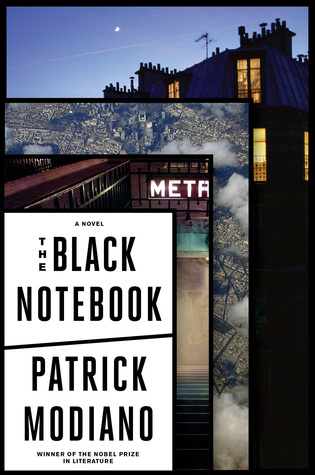
The Black Notebook by Patrick Modiano, Mark Polizzotti (Translation)
This one is set in Paris. The narrator, with the aid of an old notebook, looks back to the 1960s when his girlfriend was somehow mixed up with a group of mysterious Moroccans. It's all very shadowy and and I love that much of it takes place in neighborhoods where I too have roamed. But this is a Paris that I can only see through Modiano's writing. He shows a dark side of the "City of Light."


The First Wife: A Tale of Polygamy by Paulina Chiziane, David Brookshaw (Translation)
Not just about polygamy, but about what it is to be a woman. An amazing book. Five women in Mozambique share a husband. When the social traditions of polygamy get to be too much for them, they plot their revenge. Excellent.


Travels with Herodotus by Ryszard Kapuściński, Klara Glowczewska (Translator)
From the title one might think that Kapuściński traveled following in the footsteps of  the Greek. That is not the case, he traveled throughout Asia, the Middle East, and Africa as a foreign correspondent for a Polish new organization with a copy of Herodotus' Histories. He reads and reflect on it when he has time. In this book he relates what he reads to contemporary events and ponders the meaning of history as we see it and as Herodotus saw it. He contends that the Greek historians method was more like the modern journalist methods than those of the modern historian.


Lillian Boxfish Takes a Walk by Kathleen Rooney
An old woman takes a walk around Manhattan on New Year's Eve 1984 and reminisces about her life. This book was inspired by a real person, Margaret Fishback, who was an ad writer for Macy's and a poet. Although Rooney worked with Fishback's papers (archived at Duke University) this book is fiction, not fictionalized biography. Parts (especially her encounters with the locals) are a bit improbable but it's a very human story and a good read.


Cooking for Jeffrey: A Barefoot Contessa Cookbook by Ina Garten (Kindle edition)
Once upon a time I collected cookbooks and actually used them. Now I pretty much cook from memory with occasional forays onto the Internet to find recipes. I now look at cookbooks as much for the pictures as for the recipes. I do watch TV food programs and enjoy Ina Garten's show. So I borrowed this for the chatty stuff about the couple and the food and for the pictures. The food photographer is Quentin Bacon (one of those wonderfully apt names) and his work does not disappoint. Garten is a fun cook who is not afraid to simplify and take shortcuts. Her recipes are easy to follow and there are a couple I might try. This Zucchini and Leek Frittata sounds good.